
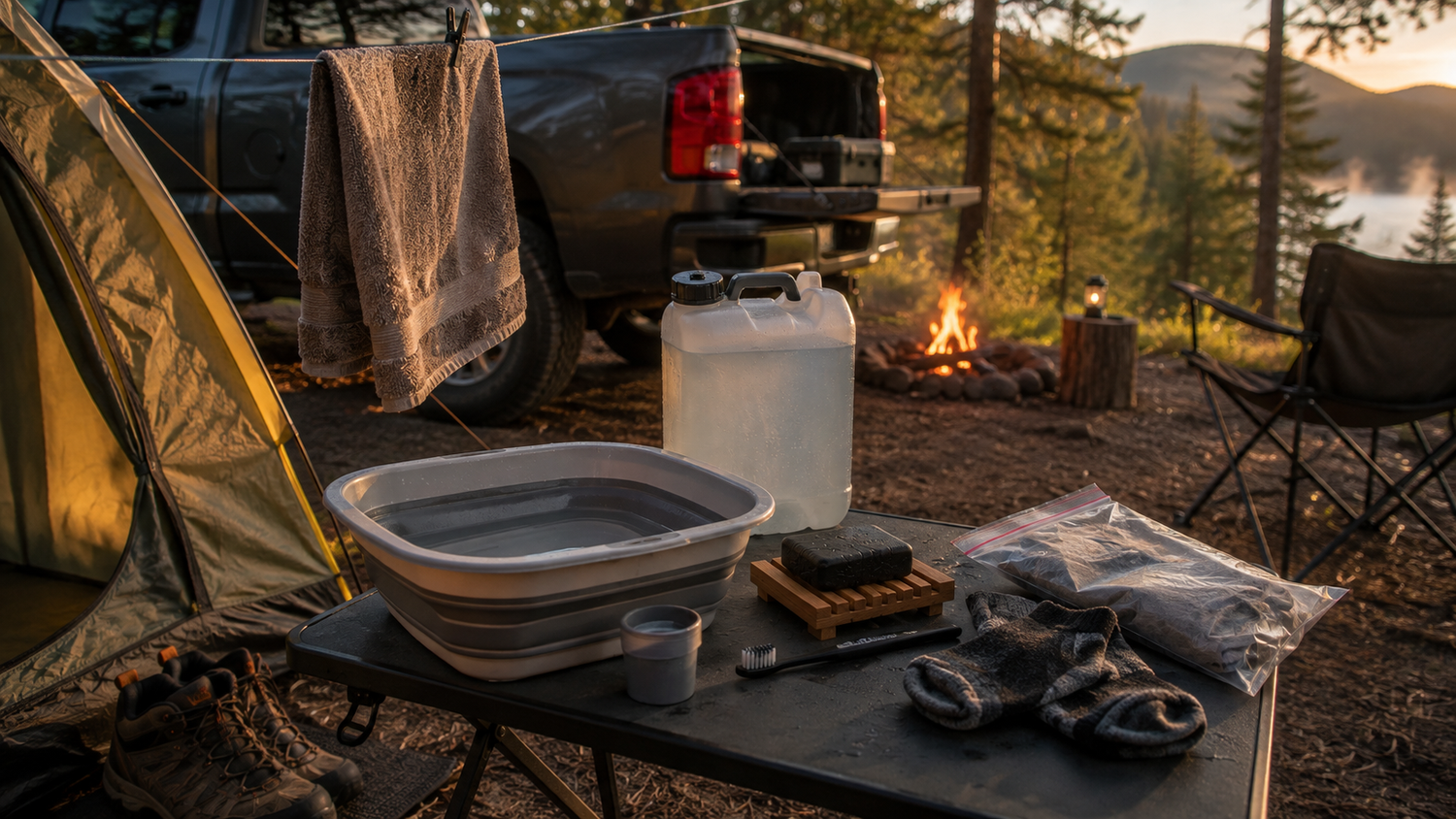
Camping hygiene exists on a spectrum.
At one end is a campground with hot showers, tile floors, mirrors, outlets, and enough amenities to make you wonder whether you technically left civilization.
At the other end is you standing beside a tent holding a water jug and reconsidering every grooming assumption you have ever made.
You do not need a full bathroom to maintain a decent routine. You need water, soap, clean clothing, and a little organization.
Start with hand washing
This is the highest-priority system.
Create an obvious hand-washing station near—but appropriately separated from—food preparation areas.
Depending on the campsite and local rules, that may include:
- Clean water container
- Soap
- Wash basin or appropriate drainage setup
- Clean drying towel or disposable option
Follow campground and Leave No Trace guidance for disposing of wash water and using soap appropriately.
Keep soap contained and dry
Bar soap can be particularly convenient for travel because there is no bottle to leak.
Carry it in a ventilated dish or container. After washing, let the bar drain and dry whenever possible instead of sealing it wet for the remainder of the trip.
Prioritize the high-sweat areas
When a full shower is unavailable, a basic wash can still make a substantial difference.
Using clean water, soap when appropriate, and privacy, focus on external areas that collect sweat and grime:
- Hands
- Face and neck
- Underarms
- Feet
- Other appropriate external areas
Follow local environmental rules regarding soap and wash-water disposal. “Biodegradable” does not mean “dump it directly into the lake.”
Clean socks become extremely valuable
Camping has a way of increasing the emotional value of socks.
Bring enough clean pairs for each day plus extras. Change damp socks and allow shoes to air out.
Do not store wet socks inside hiking shoes overnight unless you are trying to create a surprise for morning-you.
Separate clean clothing from used clothing
Pack a dedicated bag for dirty clothing.
If something is wet, allow it to dry when practical before sealing it away for long periods.
Your clean sleeping clothes should not spend the trip absorbing the personality of your hiking shirt.
Have dedicated sleeping clothes
One of the easiest ways to feel human while camping is to avoid sleeping in the same clothes you wore hiking, fishing, cooking, or sitting near a smoky fire.
Keep one clean base layer, shirt, or sleep outfit protected inside the tent or sleeping bag area.
Change before bed and let the day clothes air out where appropriate.
Handle smoke before the sleeping bag does
Campfire smoke gets into everything.
If possible, keep heavily smoky outer layers outside the sleeping area. Wash your hands and face before bed and consider changing your shirt.
Your sleeping bag does not need to smell like every campfire you have ever loved.
Deodorant is useful, but it is not the shower
Apply deodorant to clean, dry underarms.
If you have been hiking all day, adding another thick layer over sweat is not the same as washing.
Clean what you can, dry thoroughly, then apply.
Keep food hygiene separate from body hygiene
The washcloth used on your body is not the dish rag.
The food-prep towel is not the foot towel.
This may sound obvious at home. Camping has a way of putting all fabric objects into one increasingly mysterious pile.
Separate them deliberately.
Do the homecoming reset immediately
When you get home:
- Take a proper shower.
- Wash all camping clothing.
- Dry tents and gear as required.
- Open and dry soap containers.
- Clean water bottles and wash gear.
- Restock clean socks and towels.
Do not leave the camping tubs sealed until the next trip unless you enjoy opening time capsules.
The Rub take: roughing it is fine. Fermenting is optional.
A high-airflow soap saver helps keep your bar soap elevated and dry between washes, which is especially useful when packing for a campsite without a real bathroom. The Rub Rest Soap Saver & Drying Rack