
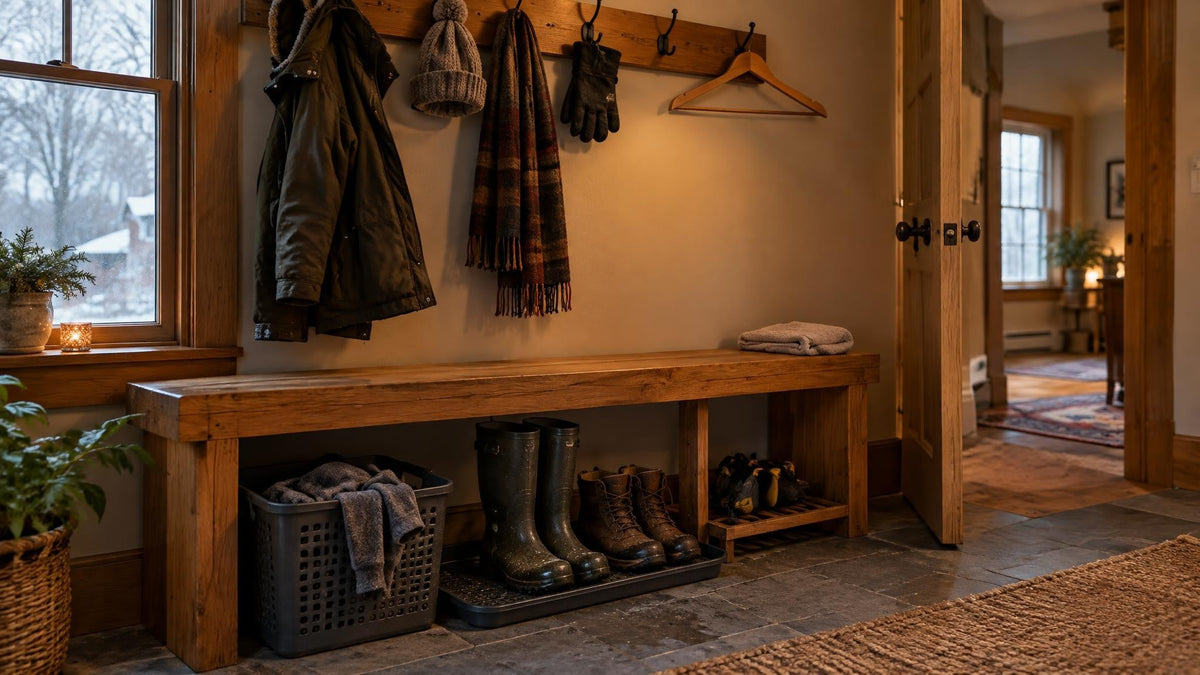
November has a way of turning the entryway into a small weather system. Wet boots arrive first. Then come the damp gloves, the hat that absorbed half the afternoon, and a coat that now smells faintly like cold air, car upholstery, and somebody’s emergency coffee.
By dinner, the mudroom is no longer a place to enter the house. It is a holding pen for moisture.
The fix is not a bigger pile of hooks or a heroic burst of tidying. It is giving each kind of cold-weather gear the right place to land, dry, and wait without turning the whole house into a basement.
Why Cold-Weather Gear Starts Smelling Strange
Odor is rarely caused by one dramatic event. It usually comes from a simple combination: fabric gets damp, air cannot move, and the item stays bundled longer than it should.
Winter gear is especially good at this because it is built to trap warmth. A thick coat holds onto body heat. Gloves fold into themselves. Hats press against hair and skin. Boots seal in moisture from rain, snow, or wet pavement. Put all of that in a closed closet and you have created a tiny indoor climate with no ventilation plan.
The answer is not to drown everything in fragrance. That just gives the original smell a louder roommate. Start by separating wet items, increasing airflow, and making sure the gear can dry before it goes back into storage.
The Drop-Zone Rules That Actually Help
1. Give wet boots their own territory
Boots should not sit directly on carpet, hardwood, or the welcome mat while they decide what to do with the water they brought home. Use a waterproof tray or washable boot mat near the door.
Leave enough space between pairs for air to move. If boots are packed tightly together, the trapped moisture has nowhere useful to go. Remove loose insoles when they are wet so both the inside of the boot and the insole can dry more effectively.
Do not put damp boots beside a heat source unless the manufacturer specifically allows it. Excessive heat can damage materials, adhesives, and finishes. Room-temperature airflow is less exciting, but it is usually the better long game.
2. Hang coats instead of folding them over furniture
A coat tossed over a chair looks harmless. Then the wet inner layer gets pressed against itself for six hours while the chair quietly regrets its career choice.
Use a sturdy hanger or a wide hook that lets the coat keep its shape. Leave a little space between outerwear pieces. If the coat is visibly damp, give it room to air out before moving it into a packed closet.
Check the care label before washing or drying a winter coat. Some outerwear can go in a household washer, while other pieces need spot cleaning, specialty care, or a manufacturer-approved method. The label is not decorative paperwork; it is the coat’s operating manual.
3. Stop treating gloves and hats like loose change
Small items are often the first things to disappear into a damp heap. Create one open basket or bin for hats, gloves, and scarves, but do not pack wet gear into it like you are loading a suitcase.
Wet gloves should be opened flat or draped over a drying rack. Hats should have enough room to hold their shape while they air out. Scarves should be hung or spread rather than stuffed into a sleeve.
A basket is useful for containment, not evaporation. If the contents are damp, the basket needs airflow too.
4. Separate “wear again” from “needs attention”
Not every cold-weather item needs an immediate wash. Overwashing can wear down fabrics, finishes, and insulation. But not every item belongs back in the closet just because it looks fine from across the room.
Make two decisions when gear comes off:
- Wear again: The item is dry, reasonably fresh, and can be hung or stored with normal airflow.
- Needs attention: The item is damp, visibly dirty, smoky, sweaty, or carrying a smell that was not part of the original design.
This small distinction keeps the clean closet from becoming a museum of questionable decisions.
The Best Place for a Cold-Weather Drop Zone
The ideal spot is close to the entrance but not trapped in a narrow, sealed closet. A mudroom, covered porch, laundry area, garage entry, or hallway with good airflow can work.
If you have limited space, prioritize in this order:
- A waterproof surface for boots and wet shoes.
- Hooks or hangers for coats.
- An open drying area for gloves, hats, and scarves.
- A washable bag or basket for items that need laundering.
- A small towel for wiping up tracked-in water before it becomes somebody’s surprise skating rink.
Keep the arrangement simple enough that everyone can use it when they are tired, cold, and carrying groceries. If the system requires a diagram, a password, and the patience of a museum curator, it will not survive the first rainy Tuesday.
What to Do When Something Already Smells
First, identify the source. Is the odor coming from the coat, the hat, the gloves, the boots, or the storage basket itself? Do not wash every item in the house because one glove started a rumor.
Air out the item in a dry, well-ventilated space. Follow the care instructions for washing, drying, and spot treatment. Clean removable parts separately when the instructions allow it. Wash or wipe the storage surface if it has collected moisture or dirt.
If the item is still damp, do not seal it inside a closet, hamper, gym bag, or plastic bin. A closed container is useful for transport. It is not a drying strategy.
For boots and shoes, follow the manufacturer’s care instructions and use cleaning methods appropriate for the material. Leather, suede, rubber, synthetic fabric, and insulated footwear do not all want the same treatment. The internet may confidently suggest many things. Your boots may not appreciate all of them.
The Five-Minute November Habit
At the end of the day, take five minutes to make the next morning easier:
- Put wet boots on the tray with space between them.
- Hang coats fully open instead of folding them over a chair.
- Separate damp gloves and hats so they can breathe.
- Move visibly dirty clothing to the laundry area.
- Leave the entryway ready for the next person instead of making tomorrow’s version of you solve today’s problem.
That is enough. You do not need a showroom mudroom or a twelve-step textile management program. You need fewer damp layers pressed together in the dark.
Keep the Gear Dry, Then Wash the Person Wearing It
Smart storage handles the fabric problem, but cold-weather gear still spends all day close to your skin. After a long commute, outdoor job, chilly walk, or weekend project, a proper shower is still the cleanest place to deal with sweat and whatever the weather handed you.
If you want a bar made for the shower, Hidden Harbor natural soap is a practical fit, with a layered citrus-and-amber scent and a rich lather for washing away the day’s sweat and grime. Keep the gear breathing, keep the boots off the carpet, and remember: wet fabric needs airflow, not a motivational speech.