
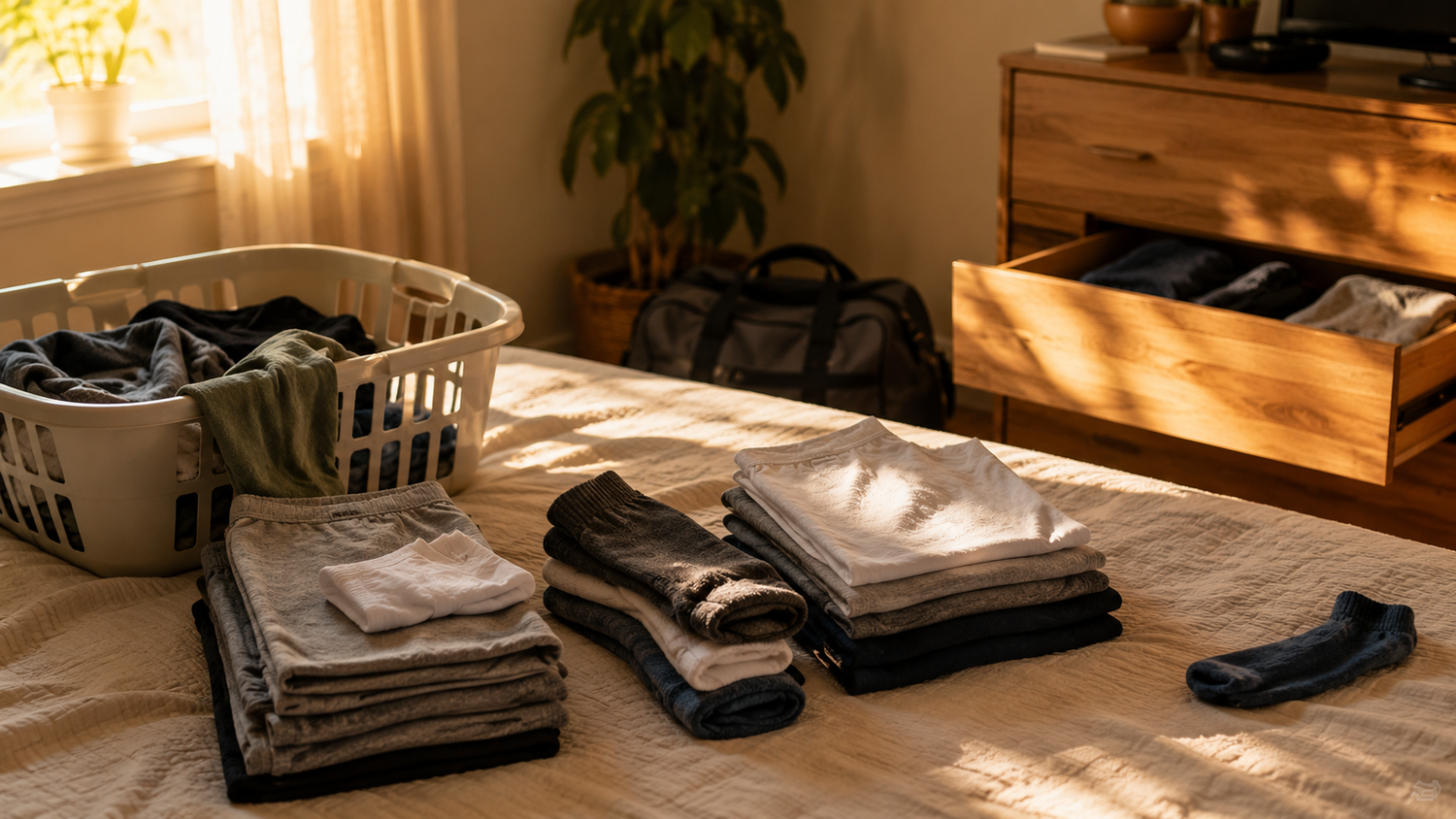
Underwear is one of those subjects everyone understands until laundry day suggests otherwise.
It is a daily basic. It is also somehow the first category to disappear when the hamper fills, the gym bag goes unemptied, or somebody decides they can stretch laundry one more day through confidence alone.
A dependable hygiene routine begins with clean basics. Not expensive basics. Not dramatic basics. Clean ones.
Change the daily-contact items daily
Underwear and socks spend the day doing close-contact work. Give them one shift.
After wearing them, place them in the laundry rather than returning them to a chair, floor, bathroom hook, or ambiguous “not clean but not dirty” zone.
That zone is not a system. It is clothing limbo.
Keep enough pairs to match your real laundry schedule
If you wash clothing once a week, owning three practical pairs creates unnecessary suspense.
Build a supply that matches your actual routine, including:
- Regular work or daily wear
- Exercise
- Travel
- Hot-weather clothing changes
- One or two delays in the laundry schedule
The goal is not hoarding. It is avoiding a Thursday morning crisis created by Sunday-night optimism.
Handle sweaty clothing promptly
Workout clothes, outdoor-work clothing, and damp basics should not remain sealed inside a gym bag, backpack, hamper, or vehicle.
Empty the bag when you get home. Allow damp items to air appropriately or move them to the laundry according to their care instructions.
Clothing does not become less sweaty because the zipper is closed.
Wash according to the garment instructions
Check care labels for water temperature, machine settings, drying, and material restrictions.
Use an appropriate amount of detergent. Overloading the machine or adding heroic quantities of soap does not guarantee better results.
Clothes need room to move, rinse, and dry.
Dry everything completely
Do not fold damp waistbands, thick seams, or socks into a drawer.
Check items before putting them away. Damp clothing stored in a closed space can develop an unpleasant smell and turn the clean drawer into a disappointment box.
Retire the pairs that have completed their service
There comes a time when practical thrift becomes structural denial.
Retire items with failed elastic, permanent odor, significant damage, uncomfortable fit, or fabric that has become more philosophical than functional.
You do not need to wait until a waistband has legally separated from the garment.
Separate clean storage from used clothing
Keep clean underwear and socks in a dedicated drawer, basket, or shelf.
Do not store them beside damp towels, used workout gear, or shoes. Clean basics should not have to survive an obstacle course before reaching your body.
Pack more than one pair for travel
Travel math should include delays, heat, workouts, spills, swimming, and the possibility that the return trip becomes longer than planned.
For a two-night trip, pack enough clean basics for each day plus a reasonable backup. Place used clothing in a separate bag.
This is easier than attempting to conduct emergency sink laundry in a hotel room with a hair dryer and regret.
Teach the system early
Children and teenagers should understand:
- Clean pair each day
- Dirty pair goes into the hamper
- Gym bag gets emptied
- Clean laundry gets put away
- Travel requires backups
Clear instruction is more useful than waiting until the family runs out of socks and assigning blame.
The basics create the routine
Personal care is not built only around what people see.
It is clean skin, clean clothes, fresh socks, dry towels, deodorant used properly, and enough preparation that Tuesday morning does not require creative wardrobe negotiations.
The Rub take: your underwear should not be the most suspenseful part of the week.
Pair everyday cleansing and deodorant essentials in one practical set to help keep your personal-care routine organized alongside your laundry and travel backups. Shop Savings Bundles