
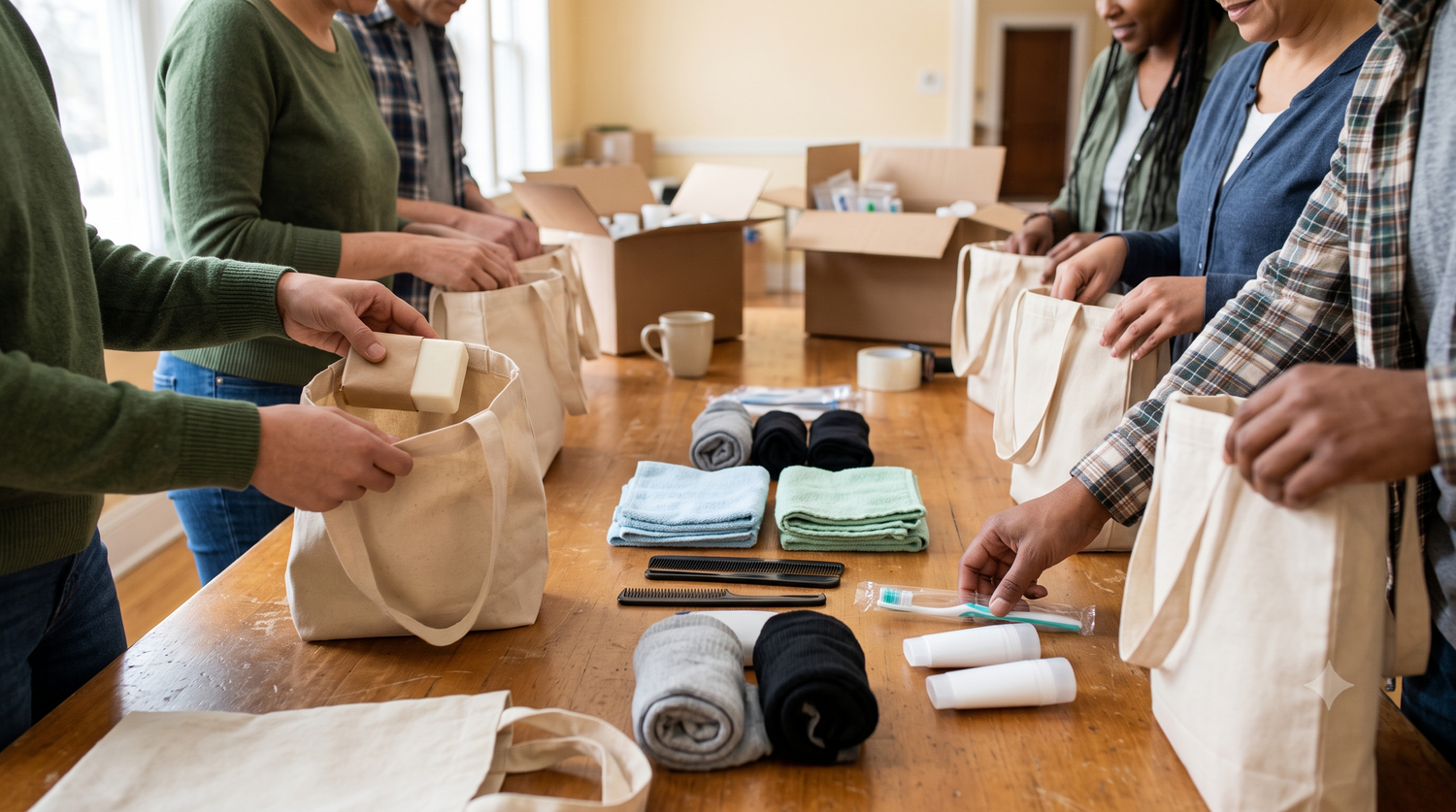
A hygiene donation kit is a small package with a straightforward purpose: give somebody useful personal-care essentials in a format that is clean, portable, respectful, and ready to use.
It sounds simple—and it should be.
But well-meaning kits can become less useful when they are packed with leaking bottles, strongly scented novelty products, opened items, impractical sizes, or twelve copies of one thing and none of another.
The best donation kit is not the fanciest. It is the one built around dignity and daily usefulness.
Start by asking what the organization needs
Before buying supplies, contact the shelter, school, food pantry, outreach program, church group, refugee-support organization, or community center receiving the kits.
Different organizations have different requirements. Some accept bar soap; others prefer sealed travel-size products. Some need men’s kits, women’s kits, family kits, or youth kits. Some have restrictions on razors, aerosols, liquids, medications, glass containers, or scented products.
Do not assume. Ask first.
Core items for a basic hygiene kit
Once you understand the organization’s guidelines, a practical kit may include:
- New, individually wrapped soap
- Toothbrush in unopened packaging
- Travel-size toothpaste
- Unopened deodorant
- Small shampoo or another approved hair-care option
- Comb
- Washcloth
- New socks
- Resealable or reusable storage bag
Only include new, unopened products unless the receiving organization specifically says otherwise.
Choose usefulness over novelty
A hygiene kit is not the place for products selected mainly because the packaging is funny, the scent is extreme, or the item looked interesting near the checkout lane.
Choose dependable basics. Neutral or mild scents may serve a wider range of people when scented products are allowed.
Think about portability too. A person carrying everything they own may not benefit from an enormous bottle that is difficult to transport or likely to leak.
Keep liquids contained
If the organization accepts liquid products, close them securely and place them in a separate sealed bag within the kit.
One loose shampoo cap can turn a thoughtful care package into a scented swamp.
A bar soap in unopened packaging can be compact and travel-friendly, but confirm that bar soap is accepted before including it.
Add socks when requested
New socks are frequently practical, compact, and easy to include. Ask the receiving group which sizes and types are most useful.
Do not include used socks. This should be obvious, but community-service instructions become stronger when they account for every possible interpretation.
Pack kits consistently
If you are assembling multiple kits, keep the contents consistent unless they are clearly labeled or divided into requested categories.
Consistency helps the receiving organization distribute supplies fairly and quickly.
Create a simple assembly line:
- Lay out all approved products.
- Assign one item to each section of the table.
- Move each bag through the complete line.
- Check every finished kit against the item list.
- Pack completed kits into clean boxes.
Protect people’s dignity
Personal-care items are personal. Build the kits with the same care you would want if one were being handed to you.
Use clean hands and a clean work surface. Do not include damaged products. Do not treat the project like a photo opportunity first and an act of service second.
A handwritten encouragement card may be welcome at some organizations and inappropriate at others. Ask before adding one.
Turn the project into an ongoing habit
One donation drive is helpful. A sustainable relationship can be even more useful.
Ask the organization whether needs change by season. Summer may bring demand for sunscreen, water bottles, or lightweight socks. Winter may create different priorities. School-start periods and emergency-response situations may require specific kits.
Set a recurring reminder, involve friends or coworkers, or keep a collection bin in an appropriate location.
Small items can restore a little normalcy
Soap, deodorant, toothpaste, a washcloth, and clean socks are ordinary things—until somebody does not have them.
A thoughtfully built kit cannot solve every problem. It can still provide comfort, usefulness, and a small measure of control during a difficult moment.
The Rub take: useful beats flashy, and dignity belongs in every bag.
Useful for preparing several donation kits at once, with a balanced mix of soap and deodorant and a built-in bundle discount. Heavy Duty Bundle | 3 Soaps & 2 Deodorants