
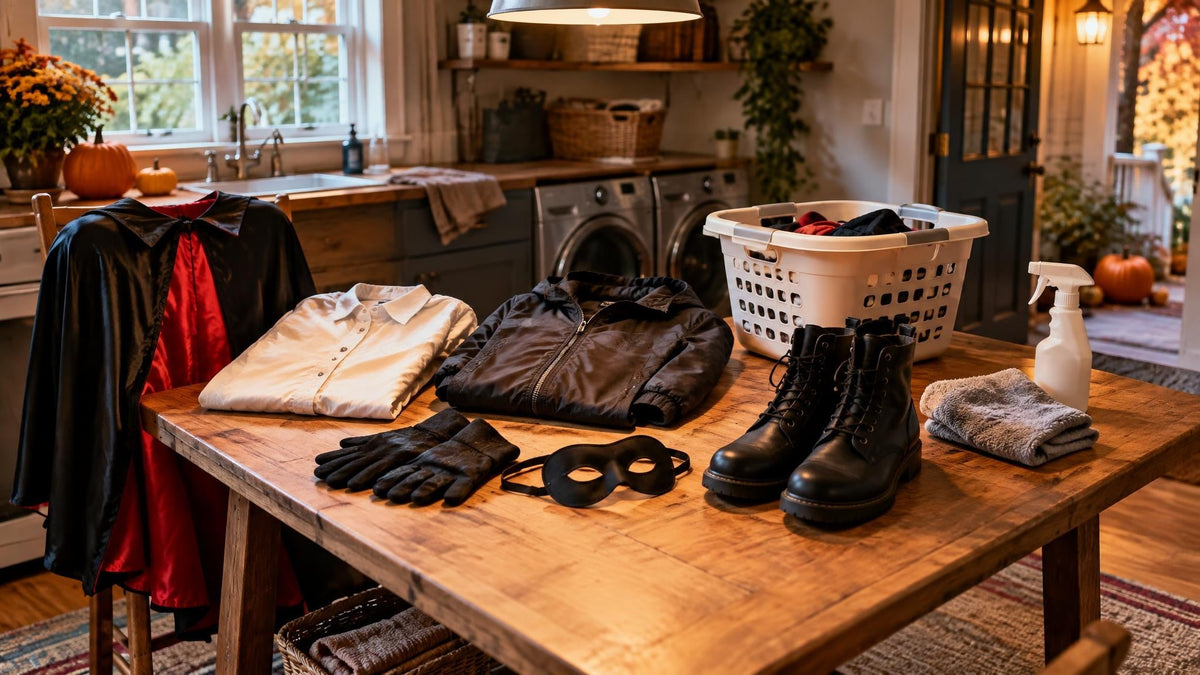
Halloween costumes are built for drama. Laundry is built for consequences.
That vampire cape, foam armor, fuzzy animal suit, or last-minute black shirt may look perfectly acceptable under porch lights. The next morning, it can smell like sweat, face paint, candy wrappers, and the inside of a plastic storage bin. That does not mean every costume belongs in the washing machine.
The trick is knowing which pieces can take a normal wash, which need fresh air, and which should be handled like a tiny theatrical emergency. Treat the materials correctly now, and next Halloween will not begin with you opening a box and discovering the ghost of last year's body odor.
Start With the Care Label and the Costume's Weakest Point
Before you dunk anything in water, look for the care label or check the manufacturer's instructions. Costumes often combine several materials that do not belong in the same treatment: polyester fabric, foam, faux fur, glued decorations, metallic trim, battery packs, and painted details.
The most delicate part controls the plan. A washable shirt paired with a glued-on shoulder piece is not a normal shirt anymore. A cape with plastic gems is not asking for an enthusiastic spin cycle. A costume with electronics should never be treated like regular laundry.
Remove anything detachable first, including belts, battery packs, plastic accessories, removable padding, and items with paper or cardboard inside. Empty every pocket. Halloween is the one night when a pocket can contain a phone, three pieces of candy, a receipt, and a small amount of decorative moss.
Use the Three-Bin Decision
When the costume comes off, sort it into one of three categories: wash, air out, or spot-clean. This simple decision prevents the classic mistake of throwing the entire costume into the washer because one part smells like a haunted gym bag.
1. Wash It
Machine washing may be appropriate for sturdy, washable fabrics such as cotton shirts, basic polyester garments, plain capes, and simple fabric accessories. Confirm the label first, then close zippers, fasten hook-and-loop closures, and turn printed or decorated items inside out when the instructions allow it.
- Use the recommended water temperature and cycle.
- Wash dark or strongly colored pieces separately the first time if color transfer is possible.
- Use a laundry bag for small fabric accessories, gloves, tights, or soft masks.
- Skip fabric softener when the care instructions advise against it.
- Dry according to the label instead of assuming high heat is harmless.
If you are unsure whether a decoration is glued, printed, painted, or stitched, choose the gentler option. A costume that survives the night does not automatically survive an industrial-strength laundry adventure.
2. Air It Out
Some costumes are not dirty enough to wash but absolutely need to stop living in a sealed bin. Hang fabric pieces in a well-ventilated area, ideally somewhere dry and away from direct heat. Turn pockets inside out and open zippers so trapped air can escape.
Air out masks, hats, jackets, and synthetic layers separately. Do not leave damp costume pieces in a heap on the floor or inside a plastic bag. A wet bag is temporary containment, not long-term storage. Moisture needs somewhere to go, and a sealed container is excellent at making sure it does not.
Give the costume enough time to dry completely before folding it. If it still smells noticeably stale after airing, move to a material-appropriate spot treatment or washing method rather than adding fragrance and declaring victory.
3. Spot-Clean It
Spot-cleaning is usually the safest approach for foam armor, faux fur, sequined pieces, structured hats, decorated shoes, and costumes with glued or painted details. Test any cleaning method on a hidden area first. Use a small amount of mild detergent diluted according to its directions and a clean cloth, then work gently from the outside of the mark toward the center.
Do not soak foam, electronics, cardboard-backed pieces, or heavily decorated accessories unless the manufacturer specifically says they are washable. Blot instead of scrubbing. Scrubbing can spread makeup, rough up synthetic fibers, lift printed designs, or turn one small stain into a larger and more confident stain.
After spot-cleaning, allow the item to dry fully in open air. Do not pack it away because the surface feels dry if the inside is still damp.
Handle the Usual Halloween Offenders
Face paint and makeup
Remove makeup from clothing as soon as practical, but avoid rubbing it deeper into the fabric. Check the garment label before choosing a stain treatment, and follow the product directions. Some makeup products contain oils or pigments that respond poorly to hot water or aggressive scrubbing.
For a washable garment, gently lift excess product first, then treat the mark before washing. For a costume with specialty fabric or glued decorations, blot and consult the care instructions instead of improvising with harsh household cleaners.
Fake blood, candy, and greasy snacks
Fake blood and candy stains are easier to manage when they are fresh. Remove solids carefully with the edge of a spoon or a dull tool, then follow the care label and use a stain method appropriate for that fabric. Do not mix cleaning chemicals, and do not assume a costume deserves the same treatment as a work shirt.
Grease deserves patience. Blot first, use a suitable pre-treatment if the fabric allows it, and keep the garment away from high heat until the stain is gone or substantially improved. Heat can make some stains more difficult to remove.
Smoke, sweat, and outdoor smells
If the costume spent the evening near a fire pit, haunted trail, crowded party, or enthusiastic bowl of chili, separate the costume from clean laundry immediately. Air out pieces individually. Wash the parts that are washable, and spot-clean or professionally handle anything that cannot be safely submerged.
Do not bury smoke or food smells under a cloud of spray. Fragrance on top of a source is just a louder version of the same problem.
Dry Everything Before Storage
Drying is the step people rush because the holiday is over and the couch is calling. Resist the urge. Damp fabric, closed containers, and forgotten accessories are a reliable recipe for stale smells.
Hang or lay pieces flat according to their care instructions. Keep foam and structured pieces supported so they do not dry into a new shape. Leave masks and shoes open. Remove batteries before storage, and store electronics separately if the manufacturer recommends it.
Once everything is fully dry, place the costume in a breathable garment bag, fabric storage box, or clean container that protects it without trapping unnecessary moisture. Keep accessories together in a labeled bag or small box so next year's search does not become an archaeological dig through the linen closet.
The Five-Minute Pre-Storage Inspection
Before closing the lid, check five things:
- Is every piece completely dry?
- Are makeup, candy, fake blood, and food marks addressed?
- Have batteries and removable accessories been taken out?
- Are the costume and accessories stored together?
- Can you identify the care instructions next year without guessing?
If the answer is yes, congratulations: you have defeated the most boring monster of Halloween, which is future-you opening a box and immediately regretting present-you's decisions.
For the person wearing the costume, the same principle applies: remove the costume, wash thoroughly, dry off, and apply deodorant to clean, dry skin before getting dressed again. Coastal Drift natural deodorant is a practical fit if you want a crisp, aquatic scent after a long Halloween night, without turning costume storage into a fragrance experiment. Pack the costume dry, keep the wearer fresh, and let the spooky stuff stay fictional.