
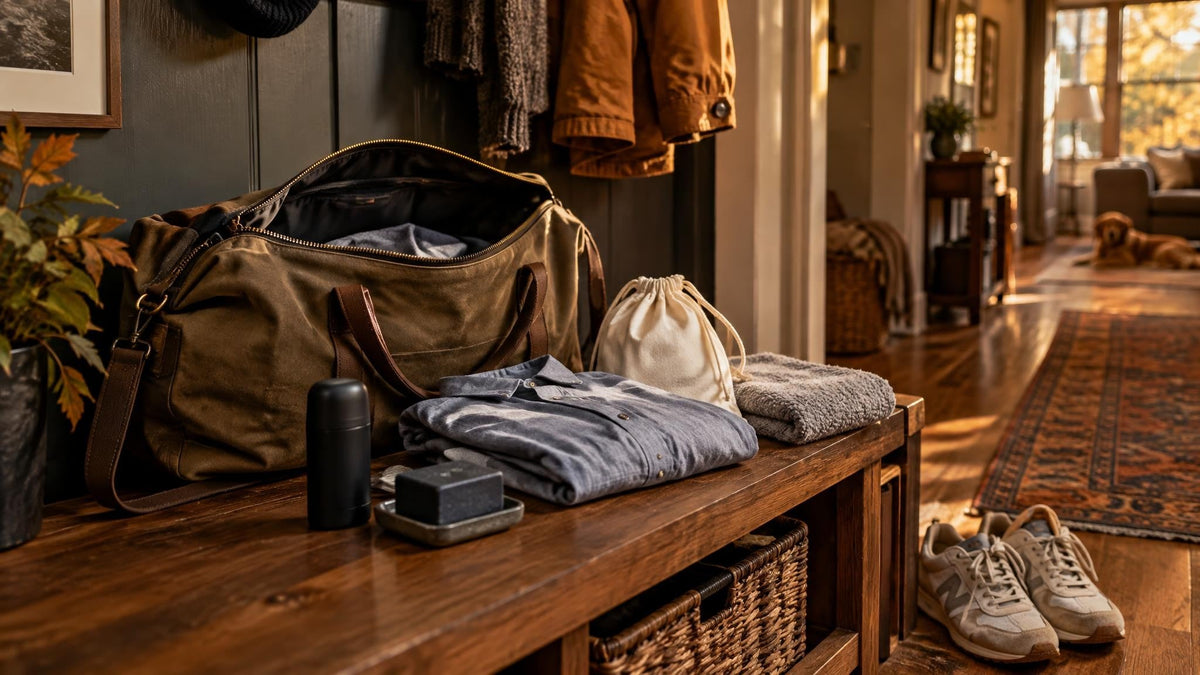
Every personal-care problem begins with a bad diagnosis.
You think your deodorant stopped working. The actual issue is a damp shirt. You think your soap is the problem. The actual issue is that it has been sitting in a puddle like a tiny bar-shaped swamp creature. You think you need a bigger toiletry bag. You actually need one clean shirt and fewer items that have not been used since the previous administration.
Personal care gets easier when you stop treating every problem like the same problem. Consider this your fall grooming algorithm: identify the evidence, find the likely source, and choose the smallest useful fix. No spreadsheet required. Although a spreadsheet would be very Ada Lovelace of you.
Start with the evidence, not the panic
Before grabbing more deodorant, taking a second shower, or accusing the laundry basket of sabotage, ask what kind of problem you are dealing with.
- Is the smell on your skin? Think sweat, body oils, or deodorant applied over yesterday's residue.
- Is the smell on your clothing? The shirt, hoodie, jacket, or hat may be holding onto odor even after washing.
- Is the smell coming from gear? Gym bags, shoes, towels, and damp laundry can become the loudest member of the household.
- Is the problem actually moisture? A wet towel or poorly drained soap bar can make a clean space smell less than heroic.
This first question matters because adding product to the wrong source usually creates a more complicated version of the same problem. Deodorant cannot repair a shirt that needs washing. Air freshener cannot negotiate with a damp gym towel. And your couch did not agree to store wet socks.
If the problem is on your skin
When odor is on your body, the useful sequence is straightforward: wash thoroughly, dry completely, then apply deodorant according to the product directions.
That order sounds obvious, which is why people skip it. Applying deodorant over sweat and old product can make the result smell like a committee meeting between three different scents. A shower does not need to become a twenty-minute production. Focus on the areas that collected sweat, rinse well, and use a clean towel.
Fall can make this more confusing because cooler mornings do not always mean less sweat. Layers trap heat. Commuting, carrying bags, climbing stairs, and sitting in a warm car can all turn a crisp outfit into a portable climate zone by lunchtime.
For deodorant, clean and dry skin gives the product a fair chance to do its job. If you are switching products, give yourself enough time to notice how the scent and feel work with your day instead of judging the first five minutes in front of the bathroom mirror.
If the problem is your shirt or hoodie
Clothing odor has a nasty habit of hiding until the fabric warms up. A shirt can smell acceptable on a hanger and immediately reveal its true character once it meets your body heat.
When that happens, do not simply add more fragrance. Check the basics:
- Wash the item according to its care instructions.
- Do not leave damp clothing sitting in the washer or a closed hamper.
- Make sure the item dries fully before folding or hanging it in a closet.
- Pay extra attention to collars, underarms, cuffs, and thick seams.
- Rotate frequently worn layers instead of wearing the same hoodie through an entire weather system.
For delicate jackets, wool pieces, uniforms, or technical fabrics, follow the manufacturer's care instructions. Some items need airing out, spot treatment, hand-washing, or professional cleaning rather than a heroic hot-water experiment.
The key idea is simple: if the smell returns when the fabric warms up, the fabric deserves the investigation. Your deodorant may be innocent.
If the problem is your bag, shoes, or towel
Gear problems are usually storage problems wearing a fake mustache.
A gym bag, work bag, or overnight bag should transport your stuff, not slowly marinate it. Remove damp clothing as soon as you can. Leave the bag open to air out. Store shoes where they can dry instead of sealing them inside a dark compartment beside yesterday's shirt.
A wet bag is temporary containment, not long-term storage.
Towels deserve the same treatment. Hang them so they can dry instead of dropping them in a heap on the floor. If a towel smells strange after washing, check whether it is actually drying between uses and whether the laundry load is being left damp for too long. The towel pile is where good intentions go to mildew, so give it less authority.
If the problem is soap care
Bar soap works best when it can dry between uses. A bar left flat in standing water will soften faster, lose its shape, and eventually become a slippery little argument.
Rinse excess suds from the bar, keep it elevated, and place it somewhere with drainage. A soap dish with airflow is more useful than a decorative tray that turns into a shallow bathtub. If the bathroom stays humid, let the bar dry outside the shower area when practical.
This is not about making soap precious. It is about not turning a useful product into soup.
Use the smallest fix that solves the actual problem
Here is the short decision tree:
- Skin smells: wash, dry, then apply deodorant as directed.
- Clothing smells: launder, dry completely, and inspect the fabric or seams.
- Gear smells: remove damp items, air out the bag, and let shoes and towels dry.
- Soap gets mushy: improve drainage and keep the bar elevated.
- Everything smells at once: stop adding fragrance and inspect the laundry, towels, shoes, and hamper.
That last category is important. When your body, clothes, and bag all seem involved, the answer is rarely “buy six more scented products.” It is usually time to separate clean from damp, wash what needs washing, and give the room some airflow.
Build a better fall setup
You do not need a bathroom full of backups. Keep the useful basics where you can reach them: one dependable soap, one deodorant you actually like using, clean towels, a hamper that can breathe, and a place for damp gear to dry.
A spare shirt in the car or work bag can also solve more problems than an emergency cloud of body spray. So can checking the weather before dressing in four layers for a day that turns warm by noon.
The goal is not to smell like a department-store fragrance counter. The goal is to smell like yourself after making a few competent decisions.
If you want a compact way to cover the main branches of this personal-care algorithm, The Rub Triple Threat bundle lets you choose two natural soaps and one Pit Master deodorant, making it a practical fit for keeping body care covered without building a whole cabinet of products you will forget to use.