
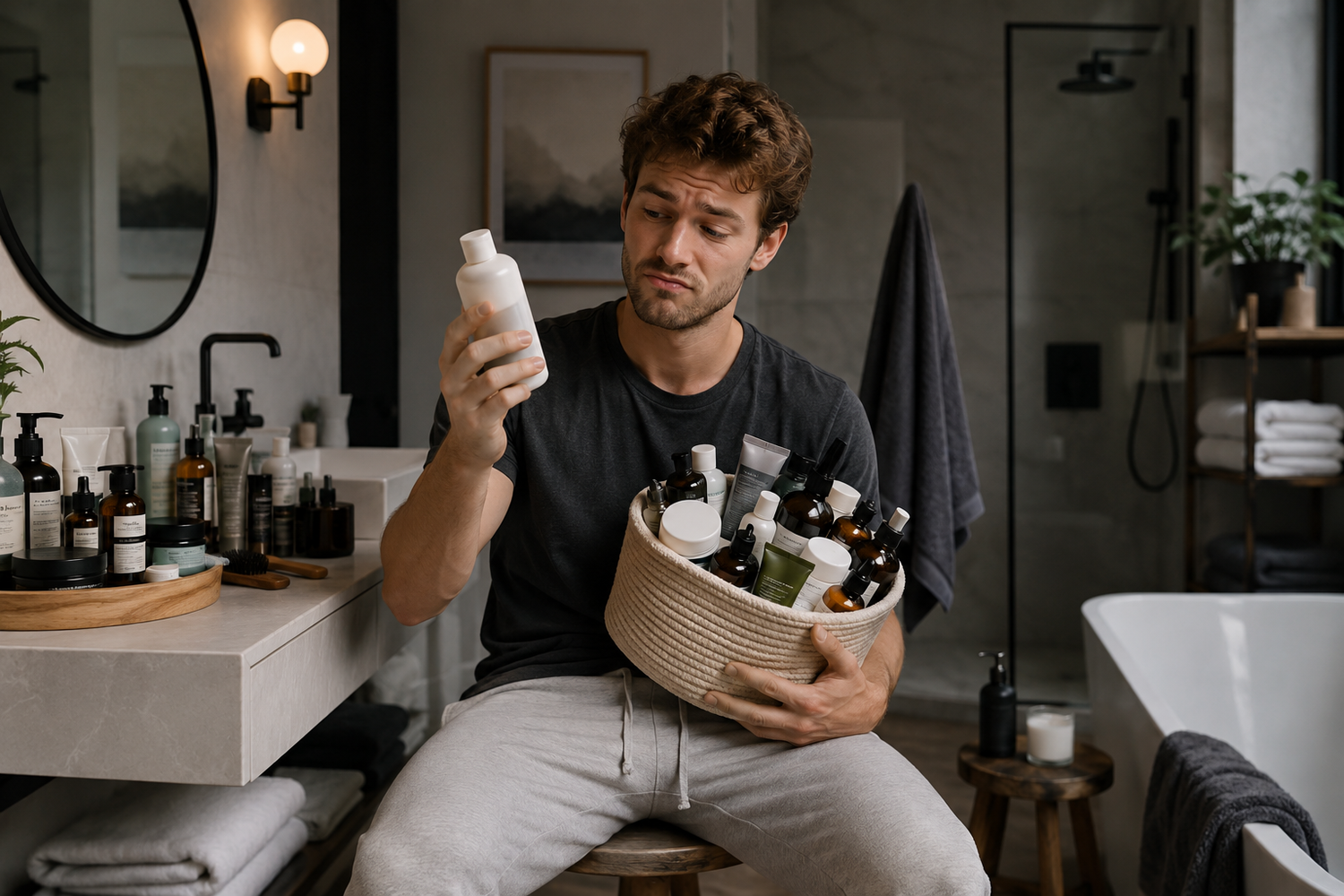
Some products walk into your bathroom like they are auditioning for a TED Talk.
They have dramatic packaging, mysterious claims, complicated routines, and ingredient lists that seem designed to make you feel underqualified to take a shower. They promise confidence, transformation, energy, dominance, clarity, balance, and possibly a better relationship with your in-laws. All you wanted was soap.
Personal care does not need to be boring, but it also does not need to act like it is solving humanity’s deepest problems. Most people are not looking for a spiritual awakening in the deodorant aisle. They are looking for something that smells good, feels good, looks decent on the counter, and does not make daily hygiene more complicated than it needs to be.
When personal care gets too precious
There is a strange thing that happens when simple products become too self-important. Soap stops being soap. Deodorant stops being deodorant. Suddenly every product needs a philosophy, a ritual, a multi-step usage guide, and a mood board. The basics get buried under branding that tries so hard to feel elevated that it forgets to be useful.
That is frustrating because personal care really does matter. The products you use every day should be better than random bargain-bin filler. Ingredients matter. Scent matters. Texture matters. Packaging matters. But those things should serve the product, not turn it into a performance.
A good product should make your day easier. It should not make you feel like you need to study before using it.
The customer is not looking for a lecture
People are smart enough to care about what they buy without wanting every purchase to become homework. They may want natural soap. They may want deodorant without aluminum. They may want products made with better ingredients. They may want something that feels more premium than the generic stuff they grabbed in a hurry.
But they probably do not want a brand standing on the sink, clearing its throat, and explaining why their entire lifestyle has been wrong until now.
That is where a lot of personal care brands miss the point. They make the customer feel like the problem. You are not clean enough. You are not natural enough. You are not disciplined enough. You are not following enough steps. You are not using enough products. You are not enlightened enough to appreciate this artisanal paste in a jar the size of a poker chip.
That is exhausting.
The better approach is simpler: you are already living a real life. You have work, family, errands, deadlines, workouts, yard projects, travel, meetings, and the occasional moment where you wonder why your bathroom drawer contains nine half-used products you no longer understand. You do not need more guilt. You need better basics.
Better basics still need personality
Simple does not mean lifeless. That is one of the biggest lies in personal care. A product can be straightforward and still feel good. It can be natural without acting fragile. It can smell great without smelling like a department store ambush. It can have humor without becoming a gag gift. It can look premium without looking like it belongs to someone who alphabetizes their serums.
The Rub was built around that middle ground.
We like products with personality. We like names that make people smile. We like scents that feel memorable. We like the idea that a bar of soap can be a little more fun than a beige rectangle from the bottom shelf. But the joke should never overpower the job. The product still has to earn its place in your shower, on your counter, or in your gym bag.
That is the line: personality in service of a better product, not personality as a distraction from a mediocre one.
The job is simple: help people feel put together
In the StoryBrand sense, the customer is the hero. Not the soap. Not the deodorant. Not the brand. The person using the product is the one trying to move through the day feeling clean, confident, and put together.
The product is just the guide. It should help. It should remove friction. It should make a small daily routine feel better. It should not demand the spotlight.
That is why we think a good personal care product should pass a few simple tests. Does it make sense immediately? Does it smell good? Does it feel good to use? Does it fit into real life? Does it last several weeks with normal use? Does it look like something you are not embarrassed to leave out? Does it make the routine easier instead of more annoying?
If the answer is yes, that is a product doing its job.
What The Rub is trying to avoid
We are not interested in making products that feel like a lecture. We are not interested in pretending a shower routine needs to be a personality test. We are not interested in fake seriousness, fake ruggedness, or fake naturalness.
We would rather make products that are easy to understand, enjoyable to use, and built with enough care that people come back to them naturally. Good soap. Good deodorant. Better scents. Better ingredients. Better packaging. Less nonsense.
That does not mean the products have to be quiet. The Rub has a sense of humor, and we are not trying to hide that. But humor works best when the product underneath it is solid. Otherwise, the joke wears off and you are left with something you do not want to use.
The best products do not try to become your identity
A great personal care product should disappear into your day in the best possible way. You use it. You like it. You feel cleaner, fresher, and more put together. Then you move on with your life.
That is not boring. That is the point.
The problem with products that try too hard is that they often make the routine about themselves. The Rub is trying to do the opposite. We want the routine to feel simpler, better, and more enjoyable without making it precious.
You do not need a bathroom full of products trying to impress you.
You need a few good ones that actually belong there.
A natural bar soap with a grounded warm-spice and citrus scent—enough personality to be memorable without overcomplicating the shower routine. Dark Spice Warm Spice & Citrus Natural Soap