
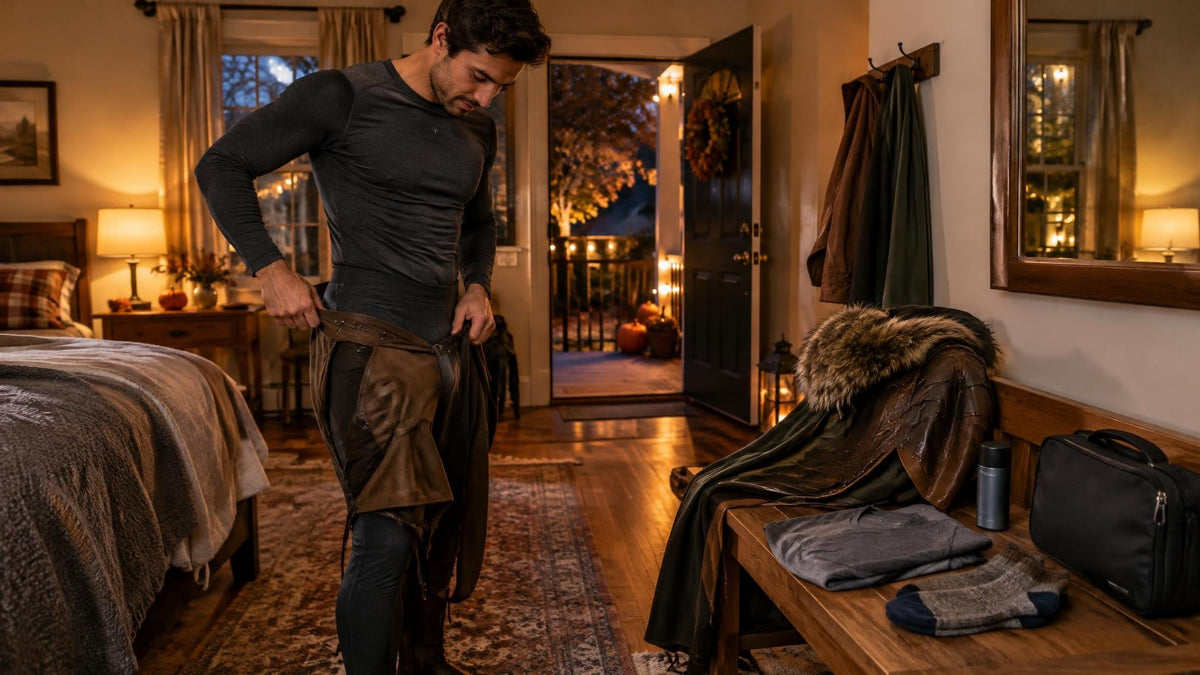
A Halloween costume can look excellent in the mirror and become a portable sauna twenty minutes later.
That is especially true when the costume involves plastic layers, fleece, face paint, fake fur, masks, wigs, or enough accessories to make sitting down feel like a strategic operation. The fix is not necessarily a lighter costume. It is choosing what goes underneath it.
A smart base layer can help manage sweat, reduce friction, keep your regular clothes from absorbing the entire evening, and make the trip home considerably less tragic. You do not need a tactical wardrobe system. You need a few decisions made before the candy bowl becomes a second job.
Start with the weather, not the costume photo
Halloween weather can be rude. One year you are standing outside in a jacket. The next, you are wearing a furry costume under a porch heater while pretending your face is not melting.
Before choosing an undershirt or extra layer, check the actual conditions for the event and think about how long you will be wearing the costume. A short neighborhood walk calls for a different setup than several hours at a party, a haunted attraction, or an outdoor event.
- Warm evening: Choose a lightweight, breathable shirt and avoid stacking unnecessary layers.
- Cool evening: Add a thin long-sleeve base layer instead of relying on one thick garment.
- Cold outdoor event: Build layers you can remove without dismantling the costume.
- Indoor party: Assume the room will feel warmer once several costumed people arrive.
The goal is flexibility. A costume should not require emergency tailoring every time you walk through a doorway.
Pick the right shirt to wear underneath
The best undershirt is usually soft, close-fitting, and simple enough to disappear under the costume. You want a layer that moves with you without bunching around the neck, armpits, or waistband.
A lightweight athletic-style shirt can work well for a warm event because it dries more easily than a heavy cotton layer. A soft cotton or cotton-blend shirt may be more comfortable for a shorter event or a costume that does not trap much heat. The important part is fit. A shirt that is too loose can bunch up. One that is too tight can make every movement feel like a minor negotiation.
Pay attention to seams, collars, and sleeve length. If the costume already has a high collar, avoid adding another bulky neckline. If the costume rubs your shoulders, choose a smoother base layer that gives your skin a little separation from rough fabric, elastic, or stiff trim.
Use the base layer to control friction
Sweat is not the only problem. Costumes can rub in places your everyday clothes never do, especially around the neck, underarms, waist, and inner thighs.
A comfortable base layer creates a buffer between your skin and the costume. That can make walking, dancing, sitting, and reaching for miniature chocolate bars much easier.
For costumes with skirts, kilts, robes, or loose shorts, comfortable fitted shorts can help prevent chafing and keep the outfit easier to manage. For costumes with rough synthetic fabric, a smooth shirt can keep the material from dragging across your skin every time you move.
Do not introduce a brand-new garment on the night of the event if you can avoid it. Wear it briefly beforehand. If the waistband, collar, or seams annoy you in your living room, they will become the main character after two hours at a party.
Do not forget the feet
Costumes get most of the attention, but uncomfortable footwear can end the evening faster than a bad wig.
Wear socks that fit well and match the amount of walking you expect to do. If the costume requires boots or unusual shoes, test them with the socks you plan to wear. A shoe that feels acceptable for five minutes may become a courtroom exhibit by the end of the night.
- Choose clean, dry socks with enough cushioning for the shoes.
- Avoid wearing brand-new shoes for a long event.
- Bring comfortable backup footwear if you will be driving or walking a lot.
- Keep wet or sweaty socks away from the rest of your costume after the event.
Your feet do not care how accurate the costume is. They have their own editorial standards.
Apply deodorant before the costume goes on
Put deodorant on clean, dry skin before you put on the first layer. Waiting until you are already sealed inside a costume makes the process harder and usually involves more fabric contortion than anyone planned.
Give the product a moment before dressing, especially if your costume has light-colored fabric or a snug underarm area. Follow the product directions, and remember that deodorant is not a substitute for washing after a long, warm evening.
If you prefer to avoid adding another strong scent to face paint, costume fabric, candles, fog machines, and party food, an unscented option can keep the overall effect more comfortable. Halloween already has enough competing smells. Your costume does not need to announce itself like a haunted candle shop.
Build a small emergency kit
You do not need to carry a full bathroom cabinet. A compact kit can solve the problems most likely to appear after the first round of photos.
- A spare undershirt or clean T-shirt
- Travel-size deodorant
- Tissues or a small clean towel
- Water
- Bandages for shoe friction
- A sealable bag for damp clothing or sweaty socks
- A few safety pins for loose costume pieces
The sealable bag matters more than it looks. Damp clothing should not be tossed into a costume bag and forgotten until the following weekend. Temporary containment is useful. Long-term fermentation is not.
Plan the trip home before the costume wins
At the end of the event, remove the costume in a place where it can air out. Hang fabric pieces when the care instructions allow it, separate washable clothing from accessories, and let anything damp dry before storing it.
If the costume picked up smoke, food smells, or a full evening of human activity, do not solve the problem by drowning it in fragrance. Air out the pieces first, then wash or clean them according to the manufacturer’s care instructions. Some costumes need gentle surface cleaning or spot treatment rather than a trip through the washing machine.
Wash your body as needed after the event, especially if you were sweating under multiple layers. Use soap thoroughly, rinse well, and put on clean clothes. The costume gets to be dramatic. Your post-party clothing does not.
The simple Halloween formula
For most costumes, the winning combination is straightforward:
- Check the weather and event length.
- Choose one breathable, comfortable base layer.
- Use fitted shorts or smooth layers where the costume may rub.
- Wear tested socks and shoes.
- Apply deodorant to clean, dry skin before dressing.
- Pack one spare shirt and a bag for damp clothing.
- Air out and care for the costume when you get home.
You do not need to defeat Halloween. You just need to avoid becoming the sweatiest version of your character before the first group photo.
If you want a low-scent option for costume nights, True North fragrance-free natural deodorant fits the job with an unscented daily approach that will not compete with your costume, face paint, or party atmosphere. Wear the costume. Manage the layers. Let the candy do the haunting.