
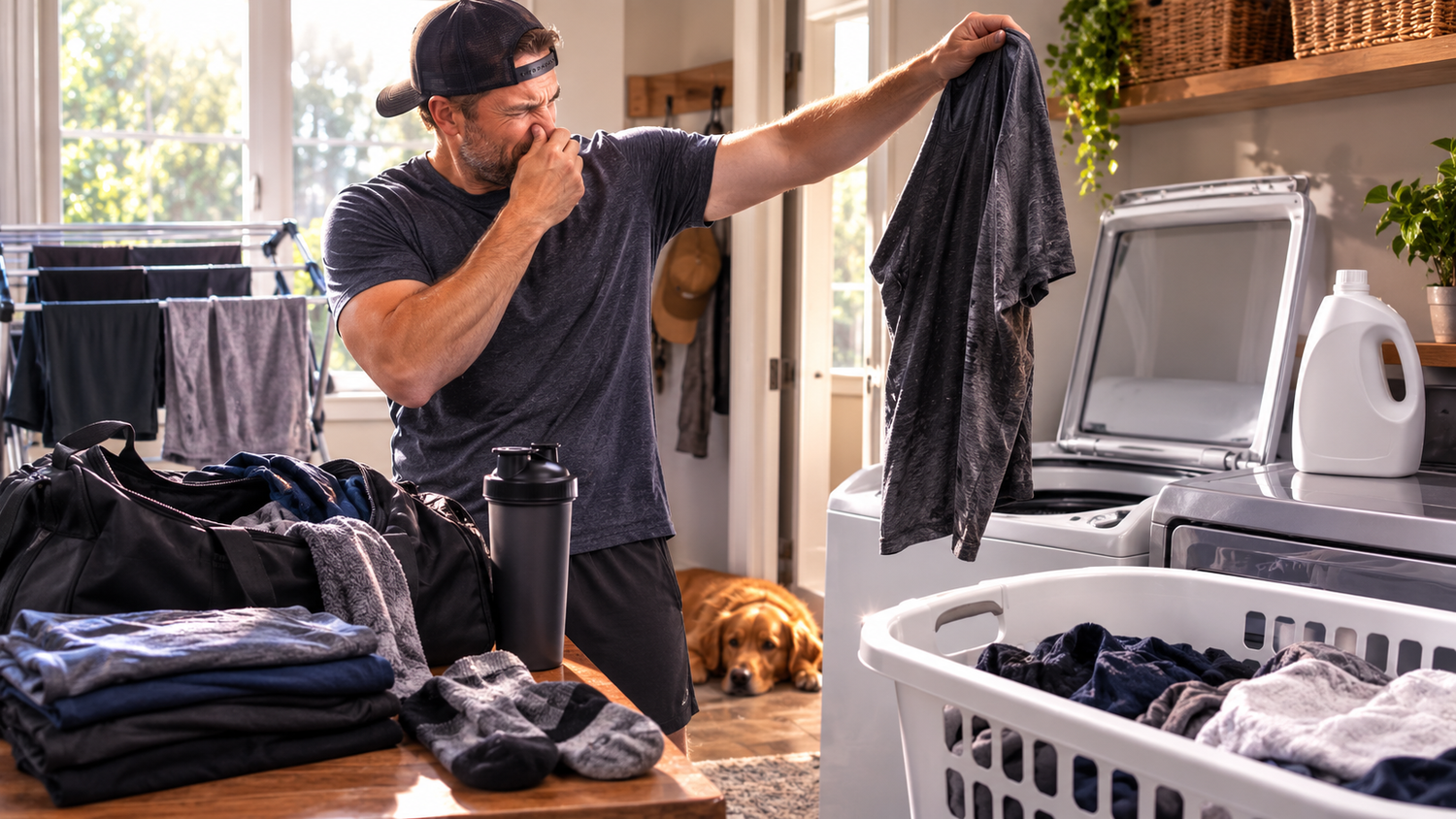
Some clothes pass the initial inspection.
They come out of the drawer appearing innocent. They smell fine from a polite distance. You put them on, begin the day, warm up slightly, and suddenly the shirt remembers every previous summer activity it has ever attended.
This is the dreaded odor comeback.
The answer is not spraying the shirt, wearing more deodorant, or spending the day holding your arms at an unfamiliar angle. The answer begins in the laundry routine.
Why clothing odor can return
Sweat, body oils, deodorant residue, detergent buildup, and incomplete drying can remain in fabric.
A garment may seem acceptable while cool and dry, then release trapped odor as body heat and moisture increase.
Synthetic workout fabrics, tightly woven performance clothing, uniform shirts, and frequently worn favorites can be especially stubborn.
Do not let damp clothes wait
After exercise, yard work, swimming, or a hot day, remove damp clothing promptly.
Do not leave it inside:
- A gym bag
- A sealed hamper
- The trunk
- A pile on the bathroom floor
- The washing machine for two days after the cycle ends
Allow wet items to air out when appropriate or wash them promptly according to the care label.
Turn problem garments inside out
The interior of a shirt receives the closest contact with sweat, body oils, and deodorant.
Turning garments inside out before washing can help expose the highest-contact areas to the wash process. Follow the garment manufacturer’s care instructions.
Use the right amount of detergent
More detergent is not always more clean.
Excess product may not rinse completely and can contribute to buildup. Follow the detergent directions for load size, soil level, water conditions, and machine type.
Do not pour with the confidence of a television chef unless the measuring line supports your artistic vision.
Do not overload the machine
Clothing needs room to move and rinse.
Stuffing the machine until the door requires negotiation may prevent items from washing effectively. Divide large loads rather than creating one dense textile boulder.
Choose temperature and cycle carefully
Use the wash temperature and cycle permitted by the clothing care labels.
Heat can damage some fabrics, shrink garments, or affect elasticity. Cooler water may be appropriate for many items, while heavily soiled washable fabrics may have different instructions.
The label outranks general internet enthusiasm.
Dry everything completely
Damp clothing folded into a drawer can develop unpleasant odor.
Check waistbands, thick seams, hoodie pockets, towels, and heavy items before putting them away. If something is still damp, keep drying it according to the care instructions.
Also leave the washer door or lid open between uses when the manufacturer recommends it, and clean the appliance as directed.
Separate the repeat offenders
If one shirt repeatedly develops odor, do not keep returning it to the regular load and expecting a personality change.
Inspect the care label, wash it appropriately, and consider whether the garment has reached the end of its useful life.
Sometimes the most freeing laundry strategy is admitting that a shirt has served honorably and may now retire from public-facing duties.
Reset the supporting cast
Odor may also be returning from items that touch clean clothing:
- Hamper
- Gym bag
- Closet floor
- Drawer interior
- Work jacket
- Backpack
- Car seat cover
Clean washable items according to their instructions and wipe appropriate hard surfaces. A freshly washed shirt stored inside a haunted gym bag has been set up to fail.
The Monday laundry reset
Use fifteen minutes to protect the week:
- Empty the gym and work bags.
- Hang damp items or move them to the wash.
- Separate heavily soiled clothing.
- Wash a reasonable-size load.
- Dry it completely.
- Clean the hamper if needed.
- Prepare clean shirts, socks, and underwear for the next few days.
Deodorant handles deodorant’s job. Soap handles washing. Laundry handles the shirt.
The Rub take: when a clean shirt starts telling old stories, wash it better—or stop inviting it out.
Browse baking-soda-free deodorants to find an option that fits your post-gym, workweek, or Monday reset routine. Natural Deodorant Collection