
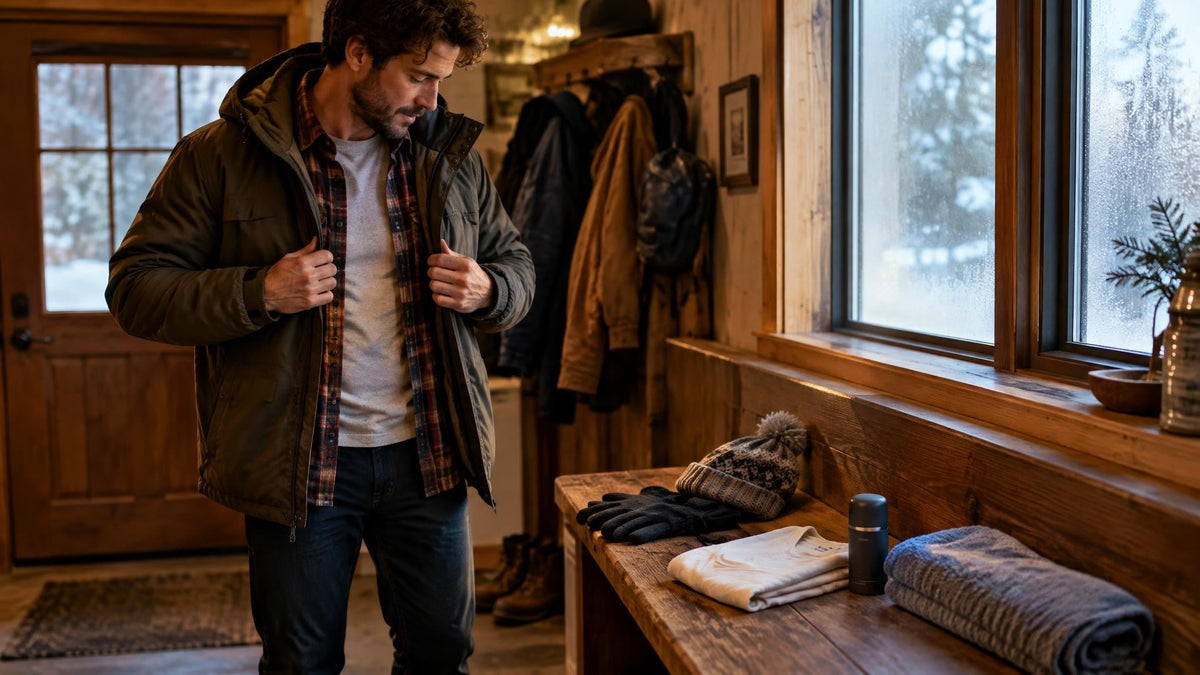
Cold weather has a talent for making ordinary grooming feel strangely unpredictable. You leave the house bundled like a well-insulated burrito, spend an hour outside, walk into a heated building, and suddenly your deodorant seems to be operating under a completely different set of rules.
That does not necessarily mean the product stopped working. More often, the season changed the conditions around it: more layers, less airflow, indoor heat, heavier fabrics, and a lot of temperature swings. Your armpits are not filing a formal complaint. They are just trapped under three shirts and a coat.
Here is what can make deodorant feel different in cold weather—and what actually helps.
Cold air does not mean you stop sweating
Winter can feel dry and cold on your face while your underarms are having a completely different experience. Walking briskly, carrying a bag, shoveling, commuting in a crowded vehicle, or standing inside a heated room can all create warmth under your layers.
The result is a familiar seasonal contradiction: your hands feel dry, but your shirt still picks up underarm moisture. Cold weather changes the environment; it does not turn your body into a decorative statue.
Deodorant helps manage odor, but it is not the same thing as an antiperspirant. If your main concern is sweat itself, use the product according to its label and choose the type of underarm product that fits your needs. If your concern is odor, application habits and clothing choices matter more than simply adding another swipe later.
The real winter culprit may be your layers
A winter outfit can hold onto more than body heat. It can also hold onto moisture, detergent residue, cooking smells, smoke, and the general atmosphere of every enclosed room you visit.
A cotton undershirt under a flannel shirt under a sweater under a coat is excellent insulation and questionable ventilation. Even if your skin is clean, the clothing closest to your body may stay damp longer than it would in summer. Once fabric remains warm and slightly moist, odor has a much better place to linger.
Before blaming your deodorant, inspect the shirt. If the smell appears mostly in one older shirt, the garment may be the repeat offender. Wash it according to the care label, let it dry completely, and avoid stuffing it directly into a drawer or hamper while it is still warm or damp.
Apply deodorant to clean, dry skin
This is the boring advice that keeps winning because it works as a basic habit: apply deodorant to clean, dry underarms.
Putting deodorant on top of yesterday’s sweat, body oil, or a layer of old product gives it a harder job. It also makes the morning application less predictable. A quick wash followed by thorough drying gives the product a cleaner starting point.
Drying matters more than people think. If your underarms are still damp from a shower, the product can feel slippery, uneven, or less comfortable. You do not need to sand yourself down with a towel. Just pat the area dry and give it a moment before getting dressed.
Use less friction, not more product
When odor shows up unexpectedly, the instinct is often to keep adding deodorant. That can leave you with a sticky layer under your arms and a shirt that feels like it has been seasoned twice.
More product is not automatically more effective. Start with a clean base, apply a reasonable amount according to the product directions, and let it settle before pulling on multiple layers. If you are switching formulas, give your skin time to adjust and pay attention to how the product feels throughout the day.
If an application causes persistent discomfort, stop using it and follow the product’s care guidance. Personal-care products are not a toughness contest.
Give your underarms a better winter environment
You do not need to redesign your closet around your armpits, but a few small changes can make cold-weather grooming easier:
- Choose breathable base layers. The layer touching your skin has a major influence on how warm and damp you feel.
- Change out of sweaty clothing. A damp undershirt should not become an overnight science project.
- Let coats and sweaters air out. Hang them where air can move instead of dropping them in a heap on the floor.
- Wash clothes according to their care instructions. Heavy fabrics and technical materials may need different handling.
- Keep a spare shirt nearby. This is useful for long commutes, outdoor work, travel, and any day involving physical effort.
- Do not confuse fragrance with cleanliness. Adding more scent over trapped odor usually creates a louder version of the same problem.
Why indoor heat can make the problem feel random
Winter schedules are full of temperature whiplash. You leave a cold parking lot, sit in a heated office, walk outside again, and then spend the evening in a crowded restaurant or living room. Your clothing keeps adjusting after your body has already moved on.
That is why a deodorant may seem fine during a short outdoor errand but less impressive after a long day of indoor meetings. The issue may be the combination of warmth, layers, and fabric rather than one dramatic failure.
Try looking at the whole day instead of judging the product after one moment. What were you wearing? Were you moving around? Did your shirt dry between activities? Did your coat absorb smoke, food smells, or damp air? The answer is often hiding in the schedule.
When to change the product
If you have cleaned the area, improved application, washed or replaced the problem shirt, and still dislike the result, it may be time to try a different deodorant format or scent profile.
Some people prefer a fragrance-free option because they already wear cologne or simply want less scent in the mix. Others like a grounded wood, fresh aquatic, or crisp outdoorsy profile that works with winter clothing. The best choice is the one you will apply consistently and that feels comfortable on your skin.
Also check whether you are expecting deodorant to do an antiperspirant’s job. Deodorant is designed for odor management, not guaranteed sweat prevention. Knowing that distinction makes it easier to choose a product without asking one stick to become a tiny climate-control system.
The winter verdict
Cold weather does not automatically make deodorant fail. It changes the conditions: more clothing, less airflow, warmer indoor spaces, and fabrics that hold onto moisture and smells.
Start with clean, dry skin. Use a reasonable amount. Wear a breathable base layer. Wash and dry clothing properly. Air out heavier garments. Then judge the product based on a full day, not one suspicious elevator ride.
Winter grooming is mostly logistics. Keep the layers from becoming a sealed container, and your underarms will have a much better chance of staying out of the family group chat.
If you want to build a practical cold-weather lineup with flexible soap and deodorant options, The Rub Heavy Duty bundle lets you choose three soaps and two deodorants while keeping the essentials together for busy, layered-up days.