
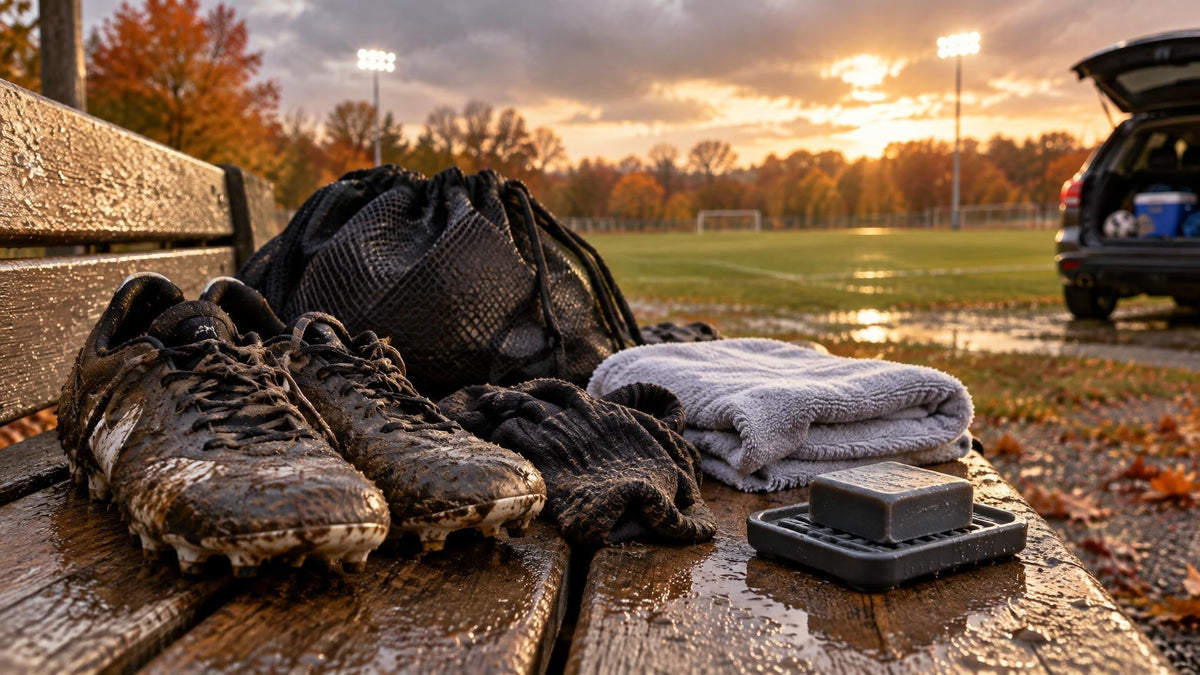
Rain turns a sports field into a chemistry experiment, and your cleats are happy to volunteer. They pick up mud, grass, sweat, and water, then get tossed into a dark bag or the back of a vehicle where air goes to die. A few hours later, the shoes smell like they have been storing secrets.
October 16 is National Sports Day, which makes it a good excuse to discuss the equipment problem nobody puts on the team calendar: why cleats smell worse after wet games, and what actually helps before the odor moves into your car, locker, or hallway.
Why wet cleats get loud
The smell usually is not coming from one dramatic source. It is the combined result of moisture, organic debris, and poor airflow.
- Rain adds moisture from the outside. Even if your socks are relatively dry, wet grass and mud can soak the uppers, laces, tongue, and insoles.
- Sweat adds moisture from the inside. Feet spend the game in a warm, enclosed space. The shoe lining absorbs some of that moisture and holds onto it.
- Grass and mud leave organic residue. Tiny bits of turf, soil, and field debris become part of the shoe’s interior environment.
- A closed bag traps the whole operation. The bag is transportation, not fermentation. Sealing wet cleats inside it gives the smell nowhere to go.
Drying the shoes matters because odor tends to become more noticeable when moisture remains. The goal is not to perfume the problem. The goal is to remove the wet conditions and the debris that keep bringing the problem back.
The post-game decision that matters most
Do not leave wet cleats in the bag while you drive home, finish dinner, or remember that tomorrow is somehow already Monday. As soon as practical, take them out of the bag and separate the pieces.
Remove the insoles if they are designed to come out. Loosen the laces and open the tongue as far as the shoe allows. Shake out loose dirt and grass over an appropriate outdoor surface. If the cleats are caked in mud, let the mud firm up slightly and brush it away rather than grinding it deeper into the material.
This small decision does more than any heroic amount of fragrance spray. Air needs access to the damp areas. Give it access.
How to dry cleats without wrecking them
- Start with airflow. Place the cleats in a dry, ventilated area where they will not be stepped on. A mudroom, covered porch, garage shelf, or laundry area can work.
- Open everything up. Pull the tongue forward, loosen the laces, and remove the insoles when appropriate. Treat each part as a separate drying problem.
- Use absorbent paper if needed. Loosely stuff the shoes with plain paper to help draw out moisture, then replace it when it becomes damp. Avoid packing the shoes tightly; you want absorption and airflow.
- Keep them away from aggressive heat. Radiators, high-heat dryers, and blasting-hot vents can damage adhesives, materials, and the shape of the shoe. Follow the manufacturer’s care instructions.
- Rotate the position. Once the outer surface feels drier, turn the cleats so air can reach the sole edges, heel, and toe box.
The best drying method is usually boring: open shoes, moving air, patience. Boring works. Your cleats do not need a spa day with a heat gun.
What to do with the insoles
Insoles are often the hidden offender because they sit directly beneath the foot and absorb sweat. If they stay damp inside the cleat, the shoe can smell fine for a short time and then become offensive the moment body heat returns.
Take them out after wet practices and games whenever the shoe design allows it. Let them dry separately. Brush off visible debris and follow the care instructions for washing. Do not assume every insole belongs in a washing machine or under a hot faucet; some are built to be wiped, aired, or replaced instead.
If an insole remains persistently damp, misshapen, or unpleasant after proper care, replacing it may be more practical than trying to negotiate with it. Sports equipment has limits. So does your patience.
Do not forget the socks and gear bag
Cleats rarely operate alone. Wet socks, shin guards, compression layers, and a gear bag can keep reintroducing moisture and odor even after the shoes have dried.
- Move damp clothing out of the bag as soon as possible.
- Hang wet layers instead of leaving them in a heap.
- Wash socks and uniforms according to their care labels.
- Let the gear bag air out with its compartments open.
- Brush mud from the bag before storing it.
- Pack a spare plastic or washable wet bag for transportation, but empty it when you arrive home.
A wet bag is temporary containment, not long-term storage. If the bag smells like the cleats, it is part of the problem, not a neutral bystander.
Should you wash the cleats?
Sometimes a gentle surface wash is useful, especially when mud or field residue has dried onto the exterior. Use cleaning methods appropriate for the material and follow the manufacturer’s care instructions. A soft brush, a damp cloth, and a small amount of suitable cleaner may be enough.
Do not soak the entire shoe unless the manufacturer specifically says that is appropriate. Deep saturation can create a longer drying problem and may damage parts of the shoe. Also skip harsh household chemicals on footwear. More aggressive does not automatically mean more effective.
For the inside, focus first on drying and airing. If the shoe still has a persistent odor after it is fully dry, check the insoles, socks, and bag before reaching for stronger products. The source is often hiding in one of those three places.
How to keep the smell from returning next game
Build a simple equipment habit around the weather. On rainy days, bring a spare pair of socks, a separate bag for wet clothing, and a place where the cleats can breathe when you get home. If you have room, a small towel can keep mud from spreading through the vehicle while the gear makes its trip back.
Before the next game, make sure the cleats are fully dry rather than merely less wet. Apply deodorant to clean, dry skin and change out of damp clothing when practical. No deodorant can turn wet gear into dry gear, and no clean shirt can rescue a sealed bag full of yesterday’s weather.
The useful sequence is simple: remove the gear, open the shoes, separate the insoles, dry everything, and deal with the bag. You are not trying to create a laboratory. You are trying to keep your hallway from smelling like a defensive line.
If sports season has turned your bathroom shelf and equipment bench into a rotating cast of damp gear, The Rub Heavy Duty bundle pairs three natural body soaps with two deodorants and includes The Rub Rest, giving active households a practical supply of shower and deodorant essentials. Dry the cleats, air the bag, and let the mud retire with dignity.