
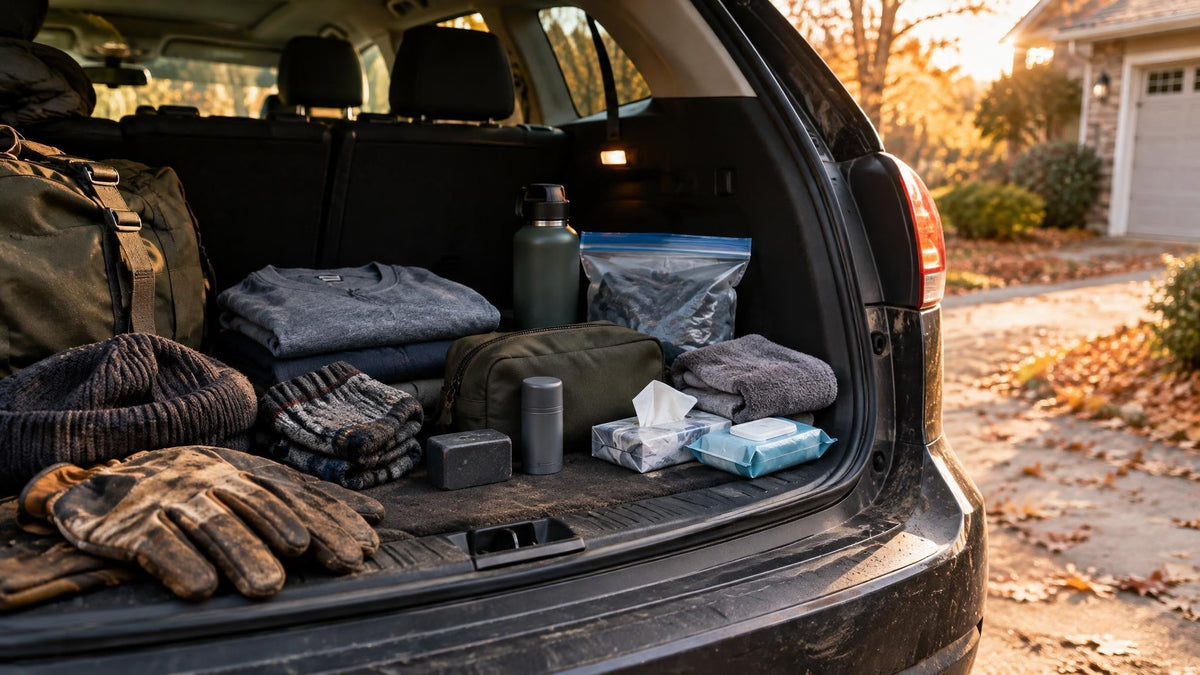
Cold weather turns a normal commute into a small personal-care obstacle course. You leave the house clean, put on three layers, scrape ice from the windshield, carry a damp coat into the office, and somehow arrive smelling like wet fabric, old coffee, and the inside of a hardware store.
The answer is not keeping a full bathroom in your car. That is how the glove box becomes a junk drawer with emotional problems. A better solution is a compact cold-weather car hygiene kit: a few useful supplies that handle sweat, damp clothing, long drives, outdoor work, and the occasional surprise meeting without taking over the vehicle.
Why cold weather makes car hygiene tricky
Winter and late-fall personal care problems usually come from a combination of moisture, layers, and poor ventilation. Cold air may feel dry, but your clothing can still collect sweat when you move between a freezing parking lot, a heated car, and a warm building.
Heavy jackets, hoodies, gloves, hats, and boots also hold onto moisture longer than a lightweight summer shirt. If damp gear gets tossed into the back seat or shut inside a gym bag, the vehicle becomes a warm little storage unit for yesterday’s weather.
Then there is the car itself. Upholstery absorbs smells. Floor mats collect mud and salt. Windows stay closed more often. A small amount of moisture has fewer places to go, so every forgotten glove starts building a case against you.
The five things worth keeping in the car
1. A spare shirt
A clean shirt solves more problems than an oversized collection of scented sprays. Choose something comfortable, neutral, and easy to fold. A moisture-wicking shirt can be useful for outdoor work or active commutes, while a plain cotton shirt works well as an office backup.
Store it in a breathable pouch or clean compartment rather than loose beside a half-empty lunch container. Replace it after wearing it. The spare shirt is a backup, not a permanent resident.
2. Deodorant for clean, dry skin
Deodorant works best as part of a clean-and-dry plan, not as a rescue coating applied over yesterday’s underarms. If you need to change after a long drive, outdoor task, or active commute, use a clean towel or rinse when possible, dry thoroughly, then apply according to the product directions.
Keeping a deodorant stick in the car can be helpful, but avoid leaving it in direct sun or extreme heat for long periods. A small toiletry pouch inside the cabin is better than a cup holder baking session.
3. A small towel
One compact towel earns its space quickly. It can dry your hands, wipe condensation from a reusable bottle, handle a damp forehead after outdoor work, or give you a clean barrier when you need to change shirts in a parking lot.
Choose a quick-drying towel and let it dry fully after use. A towel shoved wet into the kit is not preparedness. It is an incubator with good intentions.
4. A sealed bag for damp clothing
Wet gloves, sweaty shirts, and damp socks need temporary containment, especially if you still have hours left in the day. A washable waterproof pouch or resealable bag keeps moisture away from the rest of the kit.
The key word is temporary. Take the damp items out when you get home, open them up, and follow the garment’s care instructions. Do not leave wet clothing sealed in the car overnight and expect it to emerge with a résumé.
5. Hand-washing backup
Cold-weather travel creates plenty of moments when your hands need attention: pumping gas, handling road salt, loading firewood, touching shared equipment, or eating in the car because the schedule has gone feral.
Keep hand wipes or sanitizer for situations where soap and water are unavailable, and wash with soap and water when you can. If you carry liquid soap, make sure the container is sealed and stored upright. A leak in the glove box is how your registration paperwork develops a fragrance.
What does not belong in the kit
Skip anything that creates more mess than value. That includes loose grooming tools, open food, glass bottles, oversized fragrance sprays, and a pile of emergency clothing you forgot existed.
- Do not store aerosol cans in extreme heat. Follow the product’s storage directions and keep pressurized items away from unsafe temperatures.
- Do not use household cleaners on your skin. The car may need a proper surface cleaner, but your hands and face need products intended for skin.
- Do not keep used clothing in the kit. The backup system only works if the supplies stay clean and dry.
- Do not rely on fragrance to solve moisture. A pine-scented cloud over damp gloves is still damp gloves.
How to pack it without losing half the car
Use one small pouch for personal-care items and one washable bag for clothing. Keep the towel and spare shirt together. Store the kit where it is easy to reach but not rolling around under the brake pedal or hiding beneath three years of receipts.
Once a week, take everything out and check it. Replace the shirt if it smells stale, wash the towel, wipe out the pouch, and remove anything that has melted, leaked, or become mysteriously sticky. This inspection takes less time than searching for a clean sock while already late.
If your vehicle regularly carries sports gear, work clothes, or outdoor equipment, give those items their own containers. Personal-care supplies should not share a damp compartment with muddy boots. Separation is not overkill; it is how you keep one bad glove from becoming the manager of the whole operation.
The cold-weather car kit, simplified
You do not need a deluxe emergency cabinet. Start with a spare shirt, small towel, damp-clothing bag, hand-washing backup, and deodorant. Add gloves or socks if your commute or work makes them useful. Keep everything clean, dry, and easy to find.
The goal is not to make your car luxurious. The goal is to give Future You a fighting chance when the weather changes, the meeting moves, the gym bag leaks, or the outdoor project runs two hours longer than promised.
Pack for moisture, not fantasy. Dry gear, clean skin, a clean shirt, and appropriate deodorant will carry you farther than a trunk full of air fresheners. The car is transportation, not fermentation. If you want a practical supply of natural soap and deodorant for home and on-the-go use, The Rub Heavy Duty bundle pairs three soaps with two deodorants and includes a soap rest, making it a useful starting point for keeping the personal-care side of cold-weather days covered.