
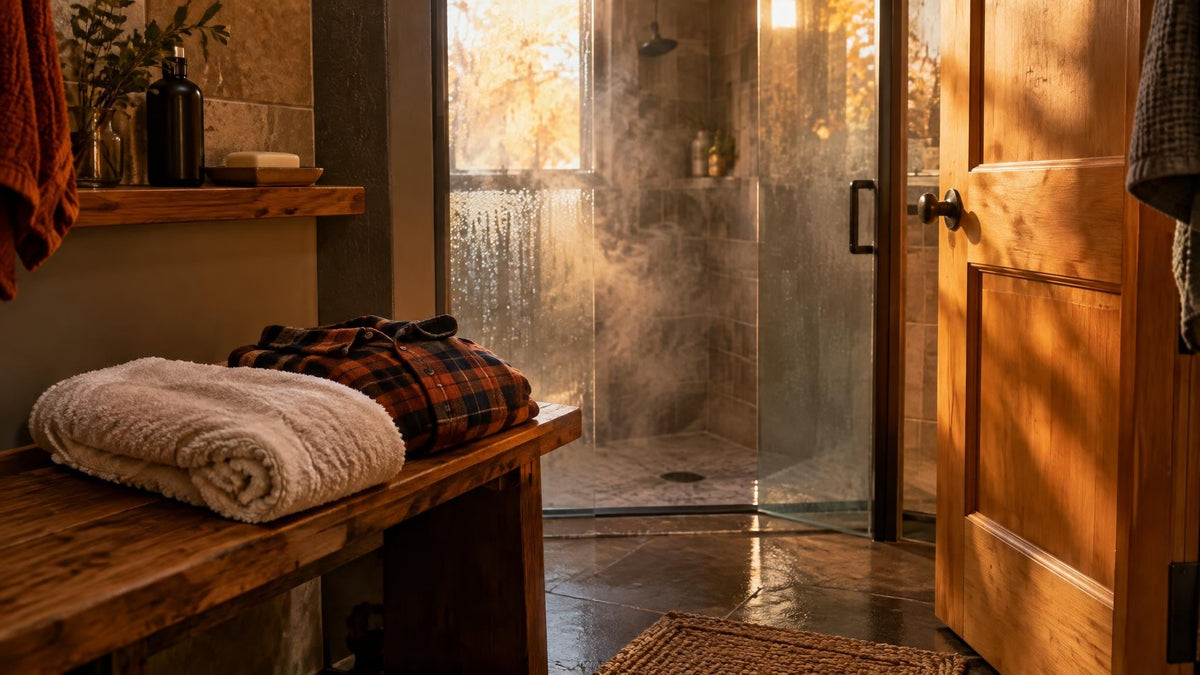
Fall showers have a way of becoming negotiations. You step in because the morning was cold, turn the handle a little farther, and suddenly you are standing under water hot enough to make your bathroom mirror question your life choices.
Hot water feels excellent in the moment. The problem is that very hot, long showers can leave your skin feeling tight, uncomfortable, or strangely thirsty afterward. Add dry indoor air, heavier clothing, and more frequent hand washing, and your fall grooming situation can start feeling less like a shower and more like seasonal maintenance on an old pickup.
The good news is that you do not need a complicated system. A few small changes can make fall showers more comfortable without turning your bathroom into a spa brochure.
Why fall showers suddenly feel harsher
Cold weather changes the conditions around your skin. Outdoor air is often drier, indoor heating can lower humidity, and heavier clothing can trap warmth and friction against your body. Then you add a long blast of very hot water, which can wash away some of the oils that help your skin feel comfortable.
That does not mean hot water is forbidden or that every shower needs to be conducted like a laboratory experiment. It means temperature and timing matter. The hotter and longer the shower, the more likely you are to notice tightness afterward, especially on areas that already tend to feel dry.
There is also a practical trap: the colder the room feels, the hotter you make the water. Then the bathroom gets steamy, you stay in longer, and the whole process becomes a heat-seeking mission. Your shower has stopped being a wash and started applying for a weather permit.
The temperature test: warm enough, not heroic
Start by lowering the temperature slightly from your usual setting. You do not have to go cold. Aim for comfortably warm water that lets you wash thoroughly without leaving your skin flushed or feeling overheated when you step out.
A useful test is what happens five minutes after the shower. If your skin feels tight, itchy, unusually dry, or generally like it has been shrink-wrapped, the water may be too hot, the shower may be too long, or both. Change one variable at a time so you can tell what helps.
- Too hot: Your skin looks flushed, the room is intensely steamy, and you feel overheated before drying off.
- Too long: You entered for a quick wash and emerged with enough wrinkles to qualify as a raisin.
- About right: You feel clean and warmed up, but not stripped, stinging, or desperate to stand beside a humidifier.
Shorter showers are not a character flaw
Fall showers often get longer because the bathroom is warm and the water feels good. That is understandable. However, a shorter shower can be more comfortable and easier on your skin than lingering under very hot water.
Use a simple order: wash your hair if needed, clean the areas that actually need attention, rinse thoroughly, and get out. You do not need to perform a twelve-step ceremony every time you shower. Your armpits, feet, groin, and any visibly sweaty or dirty areas deserve careful washing. The rest of the job does not require a dramatic soundtrack.
If you like to take long showers because they help you wake up or decompress, consider keeping one longer shower for an occasional evening instead of making every daily shower a thermal event. The goal is not to remove every enjoyable thing from fall. The goal is to stop treating your skin like a cast-iron pan that needs constant high heat.
Use soap where it earns its keep
More soap is not automatically more clean. Applying a reasonable amount and washing thoroughly is usually more useful than covering yourself in an aggressive mountain of lather.
Focus on sweat-prone and odor-prone areas, rinse well, and pay attention to how your skin feels afterward. If a product leaves you feeling uncomfortably tight every time, follow its directions and consider whether a different formula or washing pattern would fit you better.
Bar soap can work well in a fall shower, but storage matters. Let the bar drain and dry between uses rather than leaving it in a puddle. A wet bar turns soft quickly, and soft soap is less a grooming tool than a small bathroom swamp.
Liquid body wash can also make sense if you prefer one product for your hair and body or want something easy to share. Either format can do the job. The important parts are thorough washing, a comfortable temperature, and not using more product than you need.
Dry off like you plan to wear the shirt
When you leave a hot shower, it is tempting to attack your skin with a towel until every drop of water has been defeated. A gentler approach is usually more comfortable: pat or lightly press the towel against your skin, especially on areas that already feel dry.
Use a clean, dry towel and hang it where it can air out between uses. A towel folded over the floor, wedged behind a door, or left in a damp pile is not drying. It is simply waiting for a second career.
Dry thoroughly before getting dressed, especially underarms, feet, and skin folds. Dampness trapped beneath a flannel shirt, hoodie, or work layer can make you feel clammy even when the shower itself was perfectly fine.
Do not let fall layers undo the shower
Cold-weather clothing can hold onto heat and moisture. If you put on a thick hoodie immediately after a long, hot shower, you may start sweating before you have even left the house.
Give yourself a few minutes to cool down. Make sure your shirt is clean and dry, and avoid putting yesterday’s damp layer back into service just because it is already on the chair. The chair has enough responsibilities.
If you use deodorant, apply it to clean, dry skin and follow the product directions. Deodorant is not a substitute for washing, and adding more fragrance over sweat usually creates a louder version of the original problem.
A fall shower setup that actually works
You can make the whole experience easier with a few low-effort changes:
- Warm the room if needed before stepping into the shower, rather than turning the water scorching hot.
- Lower the water temperature slightly and see how your skin feels afterward.
- Keep the shower focused on washing instead of extending it indefinitely.
- Use enough soap to clean thoroughly, not enough to recreate a foam party.
- Let bar soap drain between uses and keep towels spread out to dry.
- Dry completely before putting on heavy fall layers.
- Pay attention to repeated discomfort and seek appropriate guidance for significant or persistent skin concerns.
None of this requires abandoning the pleasures of fall. Keep the warm shower. Keep the flannel. Keep the dramatic sigh when the cold bathroom floor touches your feet. Just make the water a little less aggressive and the exit plan a little more deliberate.
If you want a straightforward wash for hair and body after a cold-weather day, Deep Cedar Body Wash fits the job with an earthy, forest-inspired scent and a gel formula made for the whole operation. Warm water, clean skin, dry towel, decent shirt. That is the fall playbook.