
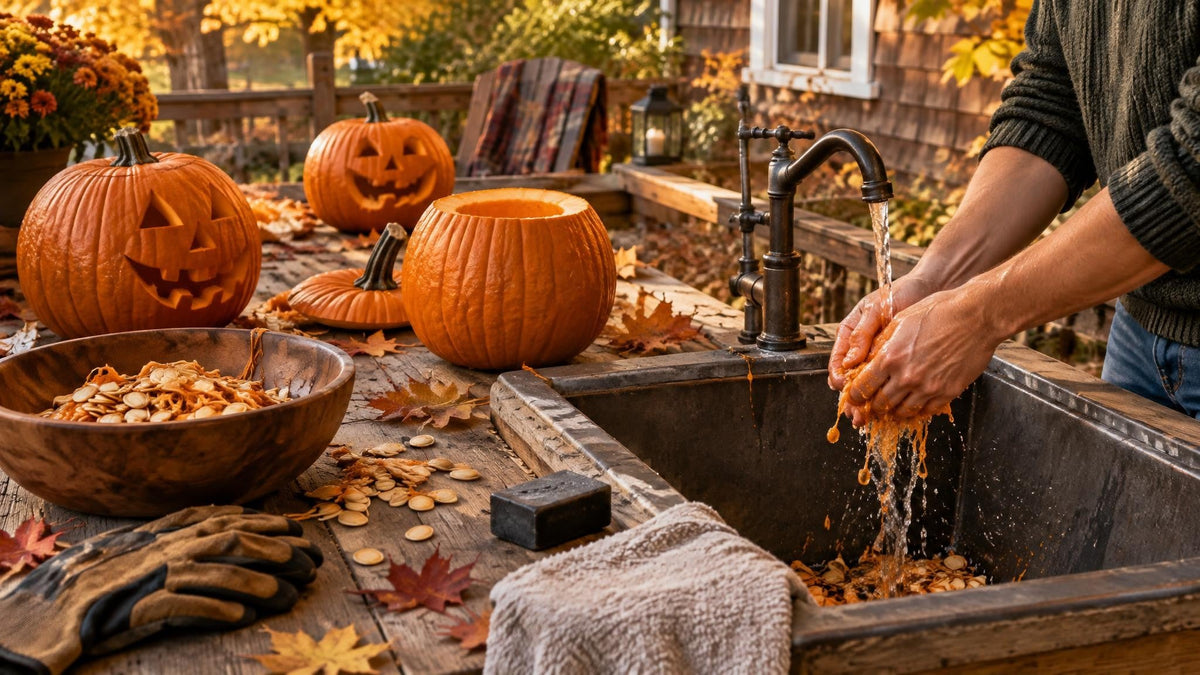
Pumpkin carving is a cheerful fall activity until your hands smell like you have been personally negotiating with a squash.
The sticky part is easy enough to notice. The stubborn smell is what hangs around. You wash once, dry your hands, and five minutes later the scent is back—on your fingers, under your nails, and possibly on the doorknob you touched while looking for more paper towels.
The good news: you do not need to scrub your skin raw or reach for an aggressive household cleaner. Pumpkin smell usually sticks around because carving leaves behind a combination of moisture, pulp, natural oils, and tiny fibers in the places a rushed hand wash misses.
Why pumpkin smell clings to your hands
Pumpkin guts are not just wet. They are stringy, slick, and remarkably good at hiding around fingernails and in the creases of your fingers. The pulp can leave a thin residue that does not always disappear during a quick rinse.
There is also a difference between removing visible mess and washing away the film left behind by that mess. Water can carry off loose seeds and strands, but it does not do the whole job by itself. Soap helps lift oils and residue so they can be rinsed away instead of being redistributed across your towel, phone, or kitchen drawer.
Then there are the nails. Pumpkin fibers love the underside of a fingernail with the confidence of a tenant who has stopped paying rent. If you wash only your palms, the smell may return as soon as the trapped material gets wet again.
The hand-washing method that works better
You do not need a complicated system. You just need to slow down long enough to cover the areas pumpkin carving usually recruits for overtime.
- Remove the big pieces first. Wipe away strings, seeds, and visible pulp with a paper towel or a disposable cloth. This keeps the sink from becoming a seasonal compost exhibit and gives the soap less bulk to fight through.
- Use comfortably warm water. The goal is to loosen residue without making your skin uncomfortable. Extremely hot water is not a badge of honor and is not necessary for ordinary hand-washing.
- Work soap across the whole hand. Rub your palms, backs of hands, between your fingers, around your thumbs, and along the sides of each finger. Pumpkin residue is a team player; it spreads beyond the obvious orange zones.
- Give your nails attention. Press the fingertips of one hand into the soapy palm of the other and move them gently back and forth. This helps work soap around the nail edges without digging at your skin.
- Rinse thoroughly. Keep rinsing until the slippery feeling is gone. If you can still feel a film, you probably still have residue.
- Dry with a clean towel. A damp towel that already smells like yesterday's kitchen is not going to improve the situation. It may simply add another scent to the committee.
What not to use on pumpkin-stained hands
When a smell refuses to leave, people often escalate quickly. That is how a pumpkin-carving project turns into an unnecessary chemistry experiment.
Skip harsh household cleaners, concentrated degreasers, abrasive powders, and anything that is meant for countertops rather than skin. Do not mix cleaning products, and do not use a rough scrubber just because your hands feel slightly tacky. A little patience and proper soap coverage are more sensible than punishing your fingertips.
You also do not need to cover the smell with a cloud of fragrance. Fragrance can make your hands smell like pumpkin pie, pine trees, and confusion without removing the residue underneath.
When the smell keeps coming back
If your hands still smell after washing, check the usual hiding places before assuming the soap failed.
- Under your nails: Rinse and wash the fingertips again. A soft nail brush can help if you already have one, but use gentle pressure.
- Rings and watch bands: Pumpkin pulp can collect underneath jewelry and accessories. Remove them before washing, then clean them according to the manufacturer's care instructions.
- Cutting boards and knives: If you keep touching the same sticky tools, the smell can transfer right back to your hands. Wash tools and surfaces using methods appropriate for the material.
- Towels: A towel used by several pumpkin carvers can become damp and sour surprisingly fast. Swap it for a clean, dry one.
- Phone screens and handles: Pumpkin hands travel. Wipe shared touch points with a method appropriate for the surface, following manufacturer guidance where needed.
Make the next carving session less sticky
A few small choices can keep the mess from spreading across the house.
Set up a hand-washing station before anyone starts carving. Put soap, a clean towel, and a trash bowl or compost container within reach. If the main sink is far away, keep a roll of paper towels nearby for the first pass, but still wash properly when the carving is finished.
It also helps to separate jobs. One person can scoop, another can steady the pumpkin, and somebody else can manage the seeds. This is not a formal production line. It is simply a way to prevent the same pair of hands from touching the pumpkin, the phone, the snack bowl, and the cabinet handles in one heroic but questionable sequence.
Wear an old shirt or apron, keep food away from the carving surface, and wash hands before handling anything ready to eat. Follow normal food-safety practices for the pumpkin seeds if you plan to roast them.
The simple answer
Pumpkin smell usually lingers because residue remains around nails, finger creases, jewelry, towels, or nearby surfaces. Remove the visible pulp, use soap over the entire hand, pay attention to fingertips, rinse well, and dry with a clean towel.
That is the whole playbook. No industrial solvent. No aggressive scrubbing. No need to smell like a decorative candle called Harvest Tribunal.
For a sink-side soap that fits pumpkin carving, snack prep, and the general business of washing your damn hands, Drew’s Wash My Damn Hands soap is a practical choice because it is made for hand-washing at the sink and keeps the next round of seasonal mess easier to handle. Carve the pumpkin. Wash the evidence.