
You showered.
You dried off.
You applied deodorant.
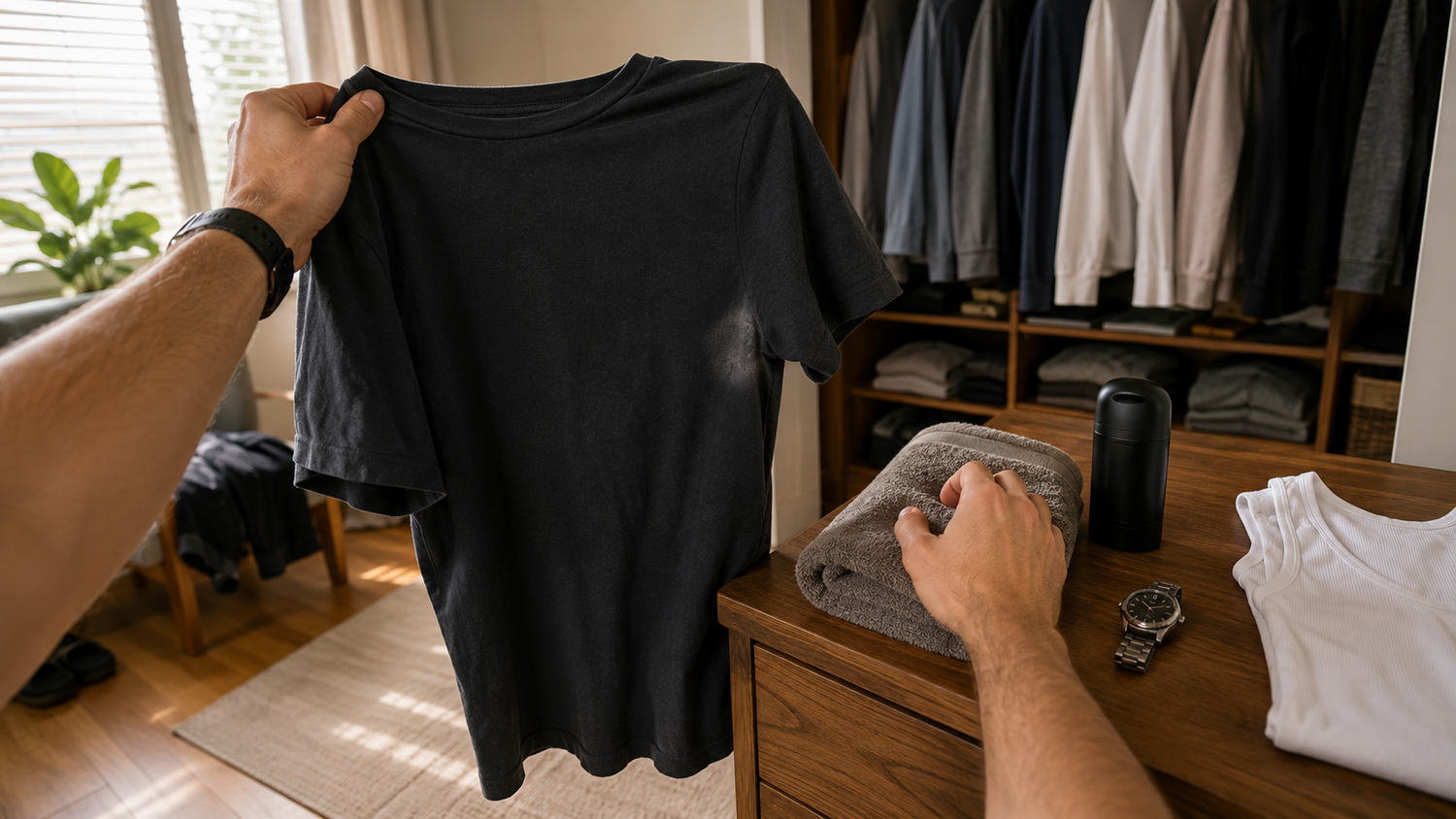
Then you pulled on a dark shirt and somehow transferred enough product onto it to create a small abstract mural.
Deodorant marks are annoying, especially when the shirt was clean thirty seconds ago.
Fortunately, a few changes in timing and technique can reduce the amount of product that ends up wearing your clothes instead of you.
Start with dry skin
After showering, dry your underarms completely.
Applying deodorant while the area is still damp can make application less even and may increase the amount of product that transfers when clothing goes on immediately afterward.
Take the extra moment. Dry first.
You probably do not need twelve passes
More product is not automatically better.
Apply a reasonable, even amount according to the product’s directions. The goal is coverage, not excavation.
If a thick visible layer is sitting on top of the skin, some of it has a good chance of meeting your shirt next.
Give it a moment before dressing
You do not need to stand around for half the morning with your arms above your head like you are signaling aircraft.
But allowing a little time between application and pulling on a shirt can help the routine feel cleaner.
Use those seconds to brush your teeth, comb your hair, or question why the left sock has disappeared again.
Put the shirt on carefully
Many deodorant marks happen during dressing, not throughout the day.
When pulling a dark or fitted shirt over your head, the fabric may drag across freshly applied deodorant.
Try keeping the shirt fabric away from your underarms as you pull it down. It requires slightly more coordination than putting on a T-shirt normally, but considerably less coordination than changing shirts afterward.
Dress first, apply second—sometimes
Depending on the shirt and the deodorant format, some people find it easier to put the shirt on first and apply deodorant carefully underneath.
This is easier with loose-fitting shirts than with clothing requiring advanced shoulder gymnastics.
Choose whichever sequence reduces transfer while still allowing you to apply the product appropriately.
Clean old residue from shirts properly
Repeated deodorant and body-oil buildup can become more noticeable over time.
Follow the garment’s care label and appropriate laundry guidance. Turn problem shirts inside out before washing so the underarm area receives direct exposure to the wash.
Use an appropriate amount of detergent and avoid overloading the machine.
Check the shirt before putting it in the dryer
If a visible mark or stain remains after washing, inspect it before heat drying.
Follow garment-specific stain-care recommendations instead of applying random household chemistry because someone on the internet said it “works every time.”
For fresh surface marks, start gently
If you notice a light deodorant streak immediately after dressing, gently brushing or rubbing the fabric against another clean section of the same fabric can sometimes lift loose surface residue.
For anything stubborn, follow the garment’s care instructions and use an appropriate laundry treatment.
Do not attack a nice shirt with whatever abrasive object happens to be nearby.
The routine matters more than heroics
Try this sequence:
- Shower or wash.
- Dry completely.
- Apply an even amount of deodorant.
- Give it a moment.
- Dress carefully.
- Launder shirts before buildup becomes a permanent resident.
Simple habits usually beat aggressive stain rescue later.
The Rub take: deodorant belongs under the shirt, not decorating it.
Explore baking-soda-free deodorants and choose the formula that fits your routine, while using a light application and allowing it to dry before getting dressed to help reduce transfer. Shop The Rub Natural Deodorant Collection