
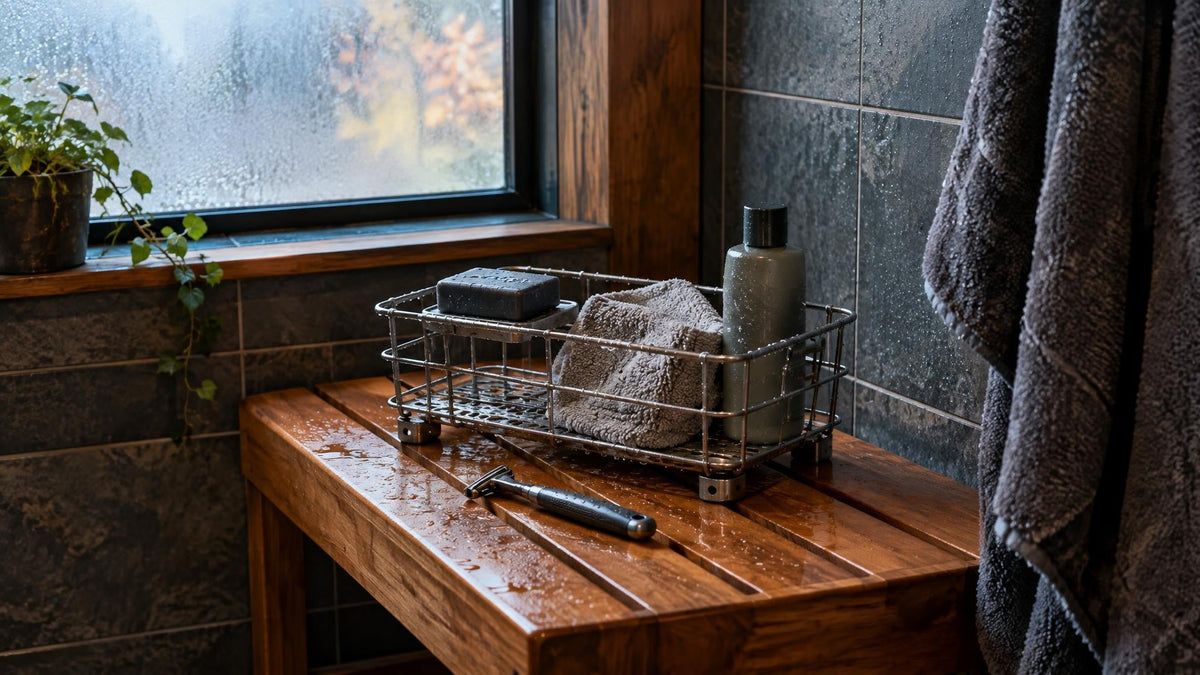
A shower caddy is supposed to hold your soap, razor, shampoo, and other small necessities. It is not supposed to smell like a damp locker room that has been hiding evidence since October.
Yet winter can make a shower caddy seem especially strange. The bathroom stays closed up longer. Windows stay shut. Towels dry more slowly. The shower gets hotter. Water sits in corners because nobody wants to reach into a cold bathroom and perform a drainage inspection before coffee.
The result is a familiar mystery: the shower itself looks clean, but the caddy smells sour, stale, or vaguely like wet laundry. The good news is that the caddy is usually not haunted. It is holding too much moisture, too many damp items, or too much residue with nowhere to go.
Why Shower Caddies Start Smelling
Most shower-caddy odor comes from a simple combination: water, trapped product residue, and slow drying. Winter makes all three more likely.
- Standing water: A caddy with a flat base or blocked drainage holes can collect water underneath soap, bottles, and razors.
- Soap residue: A bar of soap leaves behind a wet film, especially when it rests directly on the caddy instead of somewhere that allows air underneath.
- Damp fabric: Washcloths, mesh sponges, and shower poufs can stay wet for hours. If they are stuffed into the caddy, the whole area stays damp.
- Product buildup: Shampoo, conditioner, body wash, shaving cream, and cleanser can drip onto the caddy and create a sticky surface that catches dust and hair.
- Poor airflow: A crowded caddy dries slowly. So does one tucked behind a curtain or pressed into a corner.
None of this means you need to wage war on your bathroom. It means the caddy needs fewer wet things, better drainage, and a little breathing room.
Start With the Smell Audit
Before scrubbing everything, empty the caddy. Put the contents on a clean towel and smell each item separately. This takes less time than guessing, and the offender is often not the caddy itself.
Check the soap first. If the bar feels slimy or has been sitting in a puddle, it may be contributing most of the odor. Next, inspect any washcloth, loofah, or mesh sponge. These items can hold water long after the shower ends.
Then look at the bottom of the caddy. Is there a pool of water? A gray film? Hair blocking the drainage holes? A razor sitting in a small puddle like it has accepted a new career as a pond ornament?
Separate the problem into two categories: things that need washing and things that need better storage. A rinse may solve residue. Better airflow solves the repeat performance.
Give the Caddy a Proper Wash
Follow the manufacturer’s care instructions for the caddy material. For many plastic, coated-metal, or stainless-steel caddies, warm water and ordinary dish soap are enough to remove the film left by personal-care products.
- Remove every item from the caddy.
- Rinse away loose hair and product residue.
- Wash the surface with warm water and a suitable household cleaner or dish soap.
- Use a small brush or old toothbrush around drainage holes, hooks, seams, and corners.
- Rinse thoroughly so cleaner does not remain on a surface that will hold soap and grooming items.
- Dry the caddy completely before putting anything back.
Do not mix household cleaners. Do not use harsh chemicals on items that touch your skin unless the product instructions specifically say they are appropriate. The goal is a clean storage tool, not a chemistry demonstration in the shower.
Stop Letting the Soap Sit in Soup
Bar soap needs to dry between uses. If it sits on a solid shelf covered in water, it will soften faster and leave more residue behind. That residue can collect on the caddy and make the whole area smell stale.
Use a draining soap dish or rest that keeps the bar elevated. Position it away from the direct spray when possible. If your shower has one narrow shelf, place the soap where it can drain instead of where every drop of water lands.
A bar that dries properly lasts longer and leaves less sludge behind. Soap should season your shower, not become soup.
Give Wet Accessories Their Own Exit Plan
Washcloths and shower poufs should not be folded into the caddy while they are still wet. Hang them where air can reach both sides. If the item smells sour even after washing, replace it. Some accessories have simply completed their tour of duty.
Razors also need airflow. Rinse them according to their care instructions, shake off excess water, and store them where they are not sitting in a shallow puddle. A caddy hook can be more useful than another shelf.
Keep bottles upright when possible, but do not pack them shoulder to shoulder. A little space around each item helps water escape and makes it easier to notice a leak before the caddy becomes a tiny indoor swamp.
Make Winter Airflow Work Harder
Cold weather changes the bathroom’s drying conditions. The room may stay closed, the exhaust fan may run less often, and thick towels may remain damp long after the shower is over.
Run the bathroom fan during the shower and for a short period afterward if that matches the manufacturer’s guidance and your home setup. Leave the shower curtain or door open enough for air to move once the room is no longer in use. Hang towels fully open instead of folded over a hook in three damp layers.
If the caddy hangs behind a curtain, move it slightly toward the open side when possible. The goal is not to turn your shower into a wind tunnel. It is simply to stop trapping wet air around every item you use.
What to Remove From the Caddy
Many caddies smell because they are storing things that do not need to live in the shower. Take out backup bottles, extra razors, unopened products, and anything you use only once a week.
Keep the daily essentials within reach. Store backups in a dry cabinet or linen closet. This reduces clutter, improves airflow, and makes it easier to wipe the caddy before a layer of mystery residue develops.
A shower caddy is transportation and storage. It is not a warehouse, a retirement home for half-used bottles, or a place where products go to forget their original purpose.
When the Smell Keeps Coming Back
If the odor returns quickly, inspect the mounting point, suction cups, hooks, or corner where the caddy touches the wall. Water can collect behind a hanging bracket or underneath a rubber pad even when the shelves look dry.
Also check the shower curtain liner, bath mat, towel hooks, and nearby laundry. Sometimes the caddy gets blamed because it is close to the actual source. If several bathroom textiles smell damp, focus on drying and washing those items according to their care instructions.
Replace a caddy if the coating is peeling, the metal is corroding, the drainage design is poor, or the surface cannot be cleaned without damaging it. A cheap storage item is not worth defending like a family heirloom.
The Simple Standard
Your shower caddy should pass four tests: water can drain, air can move, wet accessories can hang separately, and you can see every item without moving six bottles first.
That standard is enough for most bathrooms. Wash the caddy, dry the soap, separate the wet fabric, remove the backups, and give the room a little airflow. You do not need a twelve-step grooming system. You need fewer damp objects sharing one small shelf.
If your shower needs a straightforward everyday bar to replace the soap that keeps turning the caddy into a puddle, Clean Slate natural body soap is made for an uncomplicated shower wash with a fresh charcoal-and-aloe scent, and it fits best when paired with a draining soap rest that lets the bar dry between uses. Keep the bar elevated, keep the water moving, and let the caddy retire from swamp duty.