
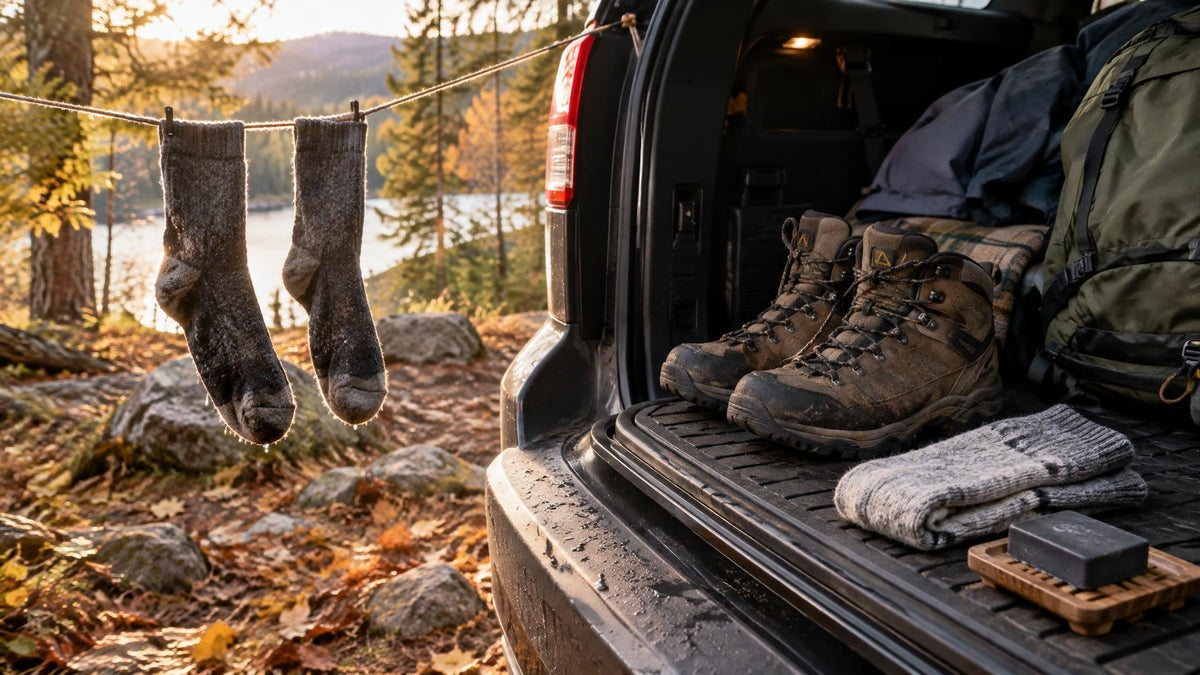
A good November hike should come home as rosy cheeks, tired legs, and a story about the hill that looked much smaller on the map. It should not come home as one damp sock quietly colonizing the floor of your car.
Hiking socks stay damp for a few predictable reasons: sweat has nowhere to go, boots hold moisture, layers trap heat, and the socks never get a real chance to dry between uses. Once that moisture is sealed inside a boot or tossed into a bag, the situation gets less like outdoor recreation and more like a tiny weather system.
The good news is that you do not need a complicated gear system. A few smart choices before, during, and after the hike can keep your feet more comfortable and your car from smelling like it has been assigned a wilderness internship.
Why hiking socks get damp in the first place
Cold air does not automatically mean dry feet. Your body still produces heat and moisture while walking uphill, climbing stairs, or hauling yourself over the part of the trail that was advertised as “moderate.” Boots and socks then work together to hold that warmth close.
Several common problems make the dampness worse:
- The socks are too thick for the boots. Extra padding can feel comfortable at first, but an overly tight boot leaves less room for air movement and can make your feet sweat more.
- The socks are made for warmth, not movement. A heavy cotton sock can absorb moisture without moving it away from your skin efficiently.
- Your boots are not fully dry from the last outing. Even a boot that feels dry on the outside may still be holding moisture in its lining or footbed.
- You wait too long to change. A small amount of dampness becomes a much bigger comfort problem after several hours.
- The socks go straight into a closed bag. A wet bag is temporary containment, not long-term storage.
Start with the right sock-and-boot combination
The best hiking sock is not always the thickest one in the drawer. Look for a fit that stays in place without bunching and a fabric made for moving moisture away from your skin. Merino wool blends and purpose-built synthetic hiking socks are common choices because they can manage moisture and temperature better than everyday cotton socks.
Fit matters just as much as material. Your heel should stay planted, your toes should have room to move, and the sock should not fold into a rope under your arch. If you put on your socks and immediately notice pressure points, the trail is unlikely to negotiate.
Your boots also need a little breathing room. They should feel secure without crushing your toes or forcing your foot into a sweaty corner. If the same pair of socks is always damp in the same spot, check whether the boot is rubbing, too snug, or holding water in its lining.
Use a two-pair strategy for longer hikes
For a short neighborhood walk, one pair may be plenty. For a longer hike, especially in cool or wet weather, packing a dry backup pair is one of the easiest comfort upgrades available.
Keep the spare pair in a sealed waterproof pouch inside your pack. Change when your original socks become noticeably damp, cold, gritty, or uncomfortable—not only when they have reached a dramatic state of defeat.
When you change, take a moment to inspect your feet. Brush away grit, smooth out wrinkles, and give your feet a brief chance to air out if conditions allow. You do not need a spa day beside the trail. You do need to stop small annoyances from becoming the only thing you can think about for the final two miles.
Let boots dry before they become a science project
When you finish hiking, remove the insoles if the manufacturer’s care instructions allow it. Open the laces wide and place the boots somewhere with good airflow. If the boots are wet, stuff them loosely with plain newspaper or a clean absorbent cloth and replace it when it becomes damp.
Avoid blasting footwear with intense direct heat unless the manufacturer specifically permits it. High heat can damage adhesives, leather, waterproof membranes, or synthetic materials. A warm, ventilated location is usually a safer choice than parking boots directly against a heater.
Do not leave damp socks inside the boots while you eat lunch, drive home, or start making dinner. The boots are transportation for your feet, not a storage unit for wet laundry.
Wash the socks like outdoor gear
Follow the care label, especially for wool blends and technical fabrics. In general, turn socks inside out, use the recommended water temperature, and avoid treating them like disposable rags. Too much heat, aggressive agitation, or an overloaded washer can shorten their useful life.
Dry them completely before putting them away. A sock that feels “almost dry” in the middle can become noticeably stale when folded into a drawer. If the weather allows, airflow is your friend. If you use a dryer, follow the garment instructions rather than choosing the hottest setting because the machine is feeling enthusiastic.
It also helps to separate genuinely dirty hiking socks from clothing that only needs airing out. Mud, sweat, and trail debris deserve a wash. A jacket worn for a short, dry walk may need airflow instead. Treating every item exactly the same creates more laundry without solving the moisture problem.
Build a simple trailhead handoff
The easiest way to prevent damp socks from taking over the rest of your day is to make the transition automatic:
- Remove hiking socks as soon as practical after the hike.
- Separate wet socks from clean clothing and dry gear.
- Open boots and let them breathe.
- Put dirty socks in the laundry instead of leaving them in the car.
- Check the spare pair and replenish it before the next outing.
- Wash your hands after handling muddy or sweaty gear, especially before eating.
That last step is easy to skip when the trailhead has no sink. Keep water and a practical hand-washing option available when appropriate, and follow park rules and local guidance for disposing of water. Outdoor hygiene should leave a lighter footprint, not a new problem beside the parking lot.
When the problem keeps coming back
If your socks stay damp every time, change one variable at a time. Try a different sock thickness, loosen or adjust the boot fit, replace worn insoles, or bring a backup pair earlier in the hike. If your feet are uncomfortable even with properly fitting gear, stop and reassess rather than pushing through a preventable problem.
Most damp-sock trouble is not mysterious. It is usually trapped moisture plus limited airflow plus a delayed change of clothes. Give the moisture somewhere to go, and the whole hike gets easier.
For the shower after a cold-weather hike, Clean Slate natural body soap is a straightforward option for washing away trail dirt, sweat, and the general evidence of having spent several hours outside. Pair it with fully dried socks, properly aired boots, and a little common sense. The trail can stay wild; your gear does not have to.